

By Andrew Rogerson, Founder, Rogerson Business Services
Lifetime Certified Business Broker (LCBB), M&A Master Intermediary (M&AMI)
Last updated: September 2026
Author Note: This guide reflects common SMB sell-side practice in California Waste & Recycling business transactions. It is not legal, tax, or investment advice.
Disclaimer: This tutorial provides general information for California sellers in the Waste & Recycling niche. Requirements and forms vary by jurisdiction. Confirm current rules with your regulators and consult qualified legal counsel and environmental professionals for your specific deal.
Closing a Waste & Recycling Business Sale | Transition Planning
The Critical Post-Signature Transition
Closing a waste and recycling business sale in California requires far more than just signing the final purchase agreement. Once buyers and sellers execute the transaction documents, the critical transition phase immediately begins. A successful handover determines whether the new owner retains the acquired enterprise value or watches it rapidly diminish.
Consider a common scenario in the waste management sector: buyers and sellers sign the contract, but poor transition planning directly threatens the retention of lucrative municipal contracts. Because local governments often scrutinize ownership changes, buyers and sellers must navigate this standoff carefully. Municipal waste agreements are usually the company’s financial lifeblood, so any disruption during the handover can jeopardize the entire deal. To protect the enterprise value, California business owners need a highly structured, strategic transition plan.
Strategic Takeaway: Secure municipal contracts and begin communication immediately after signing the transaction documents. California municipalities often require strict adherence to assignment clauses and regulatory compliance checks before approving a new operator.
A structured transition requires meticulous attention to regulatory frameworks, physical assets, and human capital. In California, operators must comply with strict environmental standards, so transition teams must coordinate seamlessly with agencies like the California Department of Resources Recycling and Recovery (CalRecycle). If the seller simply walks away on closing day, the buyer faces immediate operational and compliance risks.
Core Transition Phases for Waste Management Companies
| Transition Phase | Key Objective | California Context |
| Pre-Closing Preparation | Identify critical transfer requirements and legal obligations. | Review CalRecycle mandates and local municipal codes. |
| Immediate Post-Sign | Secure municipal contracts and build employee trust. | Submit formal assignment requests to relevant city councils. |
| Operational Handover | Transfer assets, permits, and operational knowledge. | Audit the existing fleet for CARB compliance. |
A structured, well-executed transition plan ultimately protects the enterprise value and ensures the business continues to serve its community without interruption.
If you’re planning to sell in 6 or 12 months from reading this article, start with our guide to selling a waste and recycling business in California.
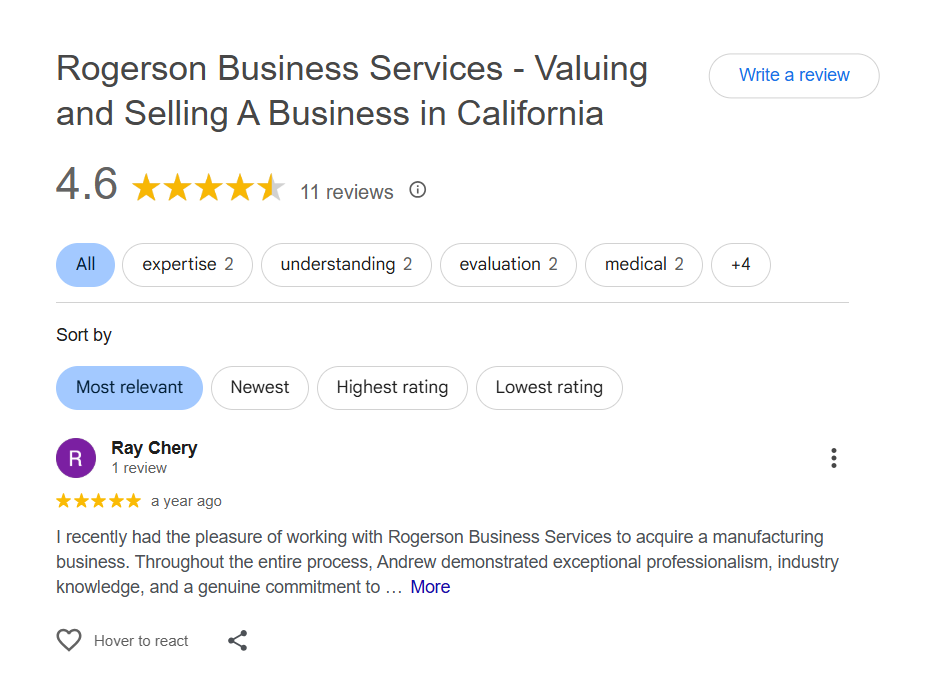
Testimonials
Erin Higgins
“After 10 years of owning and operating a service company I was burned out and ready to move on. Luckily I met Andrew Rogerson at a business meeting and expressed my interest in his services. From day one, Andrew was always polite, patient, and professional. Shortly after I listed the business with Andrew a buyer expressed interest in my company. The buyer was very demanding, had many questions, and required a lot of information from me. Not only did Andrew work endless hours as a liaison between the buyer and me, he helped me put the buyers requests in perspective and work through his demands. He always kept a positive outlook and kept things moving forward. He was supportive and thoroughly understands that selling a business that you built from the ground up is an emotional experience. It helps that Andrew has built and sold his own businesses throughout his life so he can definitely relate. He also really understands “the people part” of the business transaction, not just the transaction.Some of the amazing work that he did: 1. Andrew was there every step of the way. He set agendas, attended, and moderated all the meetings I had with the buyer which helped me feel more prepared and comfortable. 2. He promptly relayed important information from the buyer and took the time to discuss any requests and made sure I understood exactly what I needed to do. 3. He worked endlessly to answer questions from the buyer for five months without any guarantee of a sale. 4. We had lunch and evening meetings to discuss the buyer’s offer and he helped me negotiate terms. 5. He supported me throughout the process but was really there for me during the last week before we closed. With the demands of running my business, the requests from the buyer, his attorney, and my own attorney, I was feeling very stressed and felt like I was sinking. Andrew came to my office and helped me with the requests from the buyer – he even took some of the work off my hands, took it home, and worked on it. 6. He was with me to the end and attended the closing at the buyer’s attorney’s office. It felt good to have him there because I knew he was looking out for me. 6. Andrew continued to follow up with me while I worked for the buyer for the required time to make sure things were going well. 7. I always felt that he was genuine and truly cared about what was best for me, every step of the way. In the end, my business was sold for the asking price plus three years of royalties. I have been able to move on an start a new business that is more enjoyable than my last. If I ever need to sell a business in the future, there is nobody I would rather have represent me than Andrew Rogerson. I could not have sold my business on my own.“
Erin Higgins – Sacramento, CA
See more reviews and testimonials.
Is your business currently operating at the top of its game? Send a free inquiry today! Call Andrew Rogerson, Rogerson Business Services, toll-free at (844) 414-9700 | Leave a message – I’ll call you right back
Navigating Permit Transfers and Municipal Approvals
Buyers and sellers must prioritize permit transfers immediately, for local governments require unbroken regulatory compliance during a change of ownership. Although municipal codes vary across California, waste operators face strict deadlines to assign existing service contracts. If transition teams delay the necessary paperwork, they risk losing the foundational municipal contract. This delay often triggers a dangerous standoff because city councils hesitate to approve unverified new operators.
Andrew Rogerson, founder of Rogerson Business Services and a Certified Mergers & Acquisition Professional, frequently guides California business owners through these complex regulatory hurdles. He emphasizes that a stalled permit transfer directly threatens the transaction’s financial viability. To resolve or prevent a municipal standoff, the seller must proactively introduce the buyer to key city officials. Together, they present the buyer’s operational credentials, and they outline a seamless continuation of community service. City councils rarely approve an assignment clause unless they feel absolute confidence in the new ownership team’s capabilities.
Waste and recycling businesses handle sensitive materials, so the new owner must secure specific California environmental permits before operating a single daily route. Transitioning these permits requires meticulous coordination, yet many buyers underestimate the timeline.
Regulatory Agency |
Permit / Approval Type |
Action Required During Transition |
Local City/County |
Solid Waste Franchise Agreement | Submit a formal request for contract assignment directly to the city council. |
CalRecycle |
Solid Waste Facility Permit (SWFP) | Notify the Local Enforcement Agency (LEA) regarding the impending ownership change. |
Department of Toxic Substances Control (DTSC) |
Hazardous Waste Transporter Registration | File a completely new application, because DTSC registrations do not transfer automatically. |
State Water Resources Control Board |
Storm Water Industrial General Permit | Submit a Notice of Intent (NOI) through the state’s SMARTS database. |
Critical California Waste Permits Checklist Regulatory Resource: California heavily regulates waste transport and disposal to protect public health. Transitioning parties should regularly consult the California Environmental Protection Agency (CalEPA) guidelines to ensure they identify and transfer every required environmental permit without missing critical deadlines.
Sellers hold the existing community relationships, but buyers carry the burden of future compliance. They must work together collaboratively, or the deal will collapse at the finish line. When you map out the permit transition clearly, you eliminate the standoff and confidently secure the company’s enterprise value.
Fleet Handoff and Environmental Compliance
Buyers must carefully audit the physical assets during the transition, for the garbage and recycling fleet represents a massive portion of the company’s tangible value. If a buyer ignores fleet conditions, they risk sudden capital expenditures that destroy the projected Seller’s Discretionary Earnings (SDE). California enforces some of the strictest emissions laws in the world, so buyers and sellers must conduct a rigorous vehicle handoff to protect the investment.
Andrew Rogerson brings immense practical experience to this operational phase as a 5-time successful business owner and author of four books on business ownership. As a Certified Business Broker and Mergers & Acquisition Master Intermediary, he understands how physical assets dictate the final asset-based valuation. He consistently advises clients to thoroughly evaluate every truck, though some sellers resist deep mechanical inspections. The buyer must confirm regulatory compliance during the transition, or the state will ground the trucks immediately.
The California Air Resources Board (CARB) mandates strict diesel emission standards, and buyers must register the newly acquired fleet under their specific ownership entity. Sellers cannot transfer their existing CARB compliance certificates directly, yet many transition plans overlook this critical legal detail. Unless the new owner registers the vehicles promptly in the state databases, they will face severe financial penalties that disrupt cash flow.
California Fleet Handoff Checklist
| Asset Category | Action Required | Valuation Impact |
| Heavy-Duty Diesel Trucks | Verify CARB compliance and update the TRUCRS registry. | Non-compliance requires immediate capital expenditure, which suppresses the effective EBITDA multiple. |
| Route Management Software | Transfer software licenses and GPS tracking systems to the buyer. | Preserves the operational efficiency that supports the company’s enterprise value. |
| Maintenance Records | Audit historical repair logs for every specialized vehicle. | Validates the asset-based valuation figures established during due diligence. |
Regulatory Resource: Buyers must proactively verify current diesel fleet compliance rules directly through the California Air Resources Board (CARB) to ensure uninterrupted daily operations and protect the acquired business’s financial health.
Buyers must transition maintenance schedules smoothly, and they must not neglect the telematics systems that track vehicles across California municipalities. Sellers provide the historical data, but the buyer takes ultimate responsibility for future maintenance. The transition team executes the fleet handoff meticulously, guaranteeing that the trucks hit the streets safely on day one of the new ownership.
Managing the Human Element: Employee Retention and Customer Communication
The transition phase unsettles employees, so the buyer and seller must prioritize staff retention immediately. Waste management routes require specialized local knowledge, and experienced drivers hold the company’s operational memory. If the new owner loses key personnel, the business suffers immediate service disruptions. Sellers must reassure the workforce, for sudden ownership changes often trigger panic among frontline workers. The buyer introduces their leadership style quickly, yet they must also respect the existing company culture. Unless management communicates transparently, valuable employees will leave for competitors.
Customer communication requires equal attention, because California municipalities expect seamless service for their residents. Sellers craft a clear transition narrative, but buyers deliver the service promises. They must send joint letters to commercial and residential clients, although they should avoid overwhelming customers with unnecessary legal details. You don’t want residents worrying about trash pickup, and you don’t want commercial clients doubting your reliability. Buyers must satisfy commercial clients, or competitors will poach these lucrative accounts during the handover.
Andrew Rogerson, widely recognized in the California business brokerage industry for his ethical approach, often emphasizes the human element in M&A deals. As a Certified Mergers & Acquisition Professional, he observes that human capital directly impacts the Seller’s Discretionary Earnings (SDE). If a waste operation loses its top commercial route drivers, the buyer experiences sudden hiring and training costs that erode the projected EBITDA multiples. Rogerson advises sellers to introduce buyers to key accounts personally, because this warm handoff preserves the underlying enterprise value.
Stakeholder Communication Strategy
| Stakeholder Group | Immediate Action Required | Value Preservation Goal |
| Route Drivers & Dispatchers | Hold immediate town hall meetings to guarantee short-term job security. | Retain institutional knowledge and maintain daily route efficiency. |
| Commercial Accounts | Schedule face-to-face meetings with top revenue-generating clients. | Protect the lucrative recurring revenue that supports the business valuation. |
| Residential Customers | Mail joint welcome letters detailing service continuity. | Prevent customer churn and maintain trust with the local city council. |
HR Compliance Resource: When transitioning employees in California, buyers must strictly adhere to the state’s rigorous labor laws. Review the California Department of Industrial Relations (DIR) guidelines to ensure proper handling of payroll transitions, accrued leave, and worker classification during the change of ownership.
By managing the human element carefully, buyers and sellers stabilize operations. They secure the workforce, protect customer relationships, and ensure the waste management company continues to thrive under new ownership.
Seller Consulting Agreements and Finalizing the Handover
Buyers secure the physical assets and retain the frontline employees, but they also desperately need the seller’s institutional knowledge to finalize the handover. The transaction is legally complete, but the real transition depends on the former owner’s active guidance. Sellers possess decades of unwritten operational insights, so the buyer must structure a formal, legally binding seller consulting agreement. Although many sellers desire a clean break on closing day, a sudden exit threatens the stability of municipal relationships. The seller must stay involved for a designated period, for local city councils demand operational continuity.
Andrew Rogerson utilizes his background as a 5-time successful business owner to structure these critical consulting periods. As a highly credentialed Mergers & Acquisition Master Intermediary, he knows that a well-crafted consulting agreement directly protects the targeted Seller’s Discretionary Earnings (SDE). He actively guides clients through this phase because the seller holds the key to transferring commercial goodwill. Buyers must tie the consulting compensation to specific transition milestones, or they risk wasting working capital on an unproductive handover.
Transition teams must navigate California’s strict labor and business codes carefully during this phase. California heavily scrutinizes independent contractor classifications, and the state does not tolerate misclassification under laws like AB 5. If buyers misclassify the former owner during the consulting period, state agencies will levy heavy financial penalties. Furthermore, buyers must protect their newly acquired EBITDA multiples by enforcing restrictive covenants. California generally bans non-compete agreements in employment, unless the agreement falls under the specific Business and Professions Code Section 16601 exception for the sale of a business.
Structuring the Seller Consulting Agreement in California
| Agreement Component | Buyer Benefit | Seller Obligation |
| Duration & Hours | Guarantees the seller remains available during the first 90-180 days of operation. | Commits to a specific number of weekly hours to assist with the handover. |
| Key Deliverables | Secures municipal contract assignments and facilitates introductions to commercial accounts. | Actively introduces the buyer to key vendors, city officials, and major clients. |
| Non-Compete Clause | Prevents the seller from opening a rival waste management firm in the same territory. | Adheres to California B&P Code 16601 restrictions regarding the sale of business goodwill. |
Strategic Takeaway:
Never treat the seller consulting agreement as a mere formality. The transition fails unless both parties actively collaborate to transfer the intangible assets and municipal goodwill that form the foundation of the company’s enterprise value.
Buyers and sellers finalize the handover successfully when they outline clear expectations in writing. They protect the asset-based valuation, satisfy the municipality, and position the waste management company for decades of continued success in California.
Expert Guidance
The transaction closes at the signing table, but the handover determines the acquisition’s ultimate success. Sellers cannot abandon the business on closing day, and buyers should not expect automatic municipal approvals. You must manage the transition precisely, or you will lose the community goodwill and municipal contracts that define the enterprise value. The deal feels complete after you sign the papers, yet the operational transition requires intense, continued focus. California heavily regulates waste operations, so transition teams must follow compliance checklists rigorously. A structured transition plan protects enterprise value by preventing disruptions to critical municipal waste contracts. Although the seller eventually steps away, short-term consulting stabilizes the immediate handover. If you align your fleet, permits, and team successfully, you ensure long-term profitability for the new enterprise. Buyers risk severe financial penalties unless they promptly register their vehicles with the California Air Resources Board. You must secure expert guidance, for California business transitions carry immense regulatory risk.
Andrew Rogerson, founder of Rogerson Business Services, offers unparalleled expertise to business owners navigating these high-stakes exits. As a 5-time successful business owner and author of four books on business ownership, he understands the operational realities of the waste and recycling sector. He holds prestigious credentials, including Certified Business Broker (CBB), Certified Mergers & Acquisition Professional (CM&AP), and Mergers & Acquisition Master Intermediary (M&AMI). He actively guides California sellers and buyers through complex regulatory hurdles, ensuring they protect their EBITDA multiples and SDE valuations during the final handover.
Final Takeaway:
Do not leave the post-signature transition to chance. Secure a formal transition plan, communicate proactively with your California city council, and utilize expert brokerage guidance to protect your financial legacy.
To explore the complete lifecycle of valuing and selling a waste management company, review our comprehensive guide: