

By Andrew Rogerson, Founder, Rogerson Business Services (California M&A advisory) When considering an Environmental M&A Advisor vs. a Generic Broker, it’s important to understand the differences between these roles in the context of business acquisitions.
Last updated: March 27, 2026
Author note: This guide reflects common SMB sell-side practice in California fire & safety services transactions. It is not legal, tax, or investment advice.
Thinking about selling your fire and life safety business in California? It’s a big step, and you’ve probably put a lot of work into building it up. But when it comes time to sell, figuring out what it’s really worth and who might buy it can feel like a puzzle. Buyers look at things differently, and understanding their perspective is key to getting the best deal.
This guide is here to help you make sense of it all, from valuing your company to planning your exit strategy in the industrial services industry, so you can sell your fire and life safety business in California with confidence.
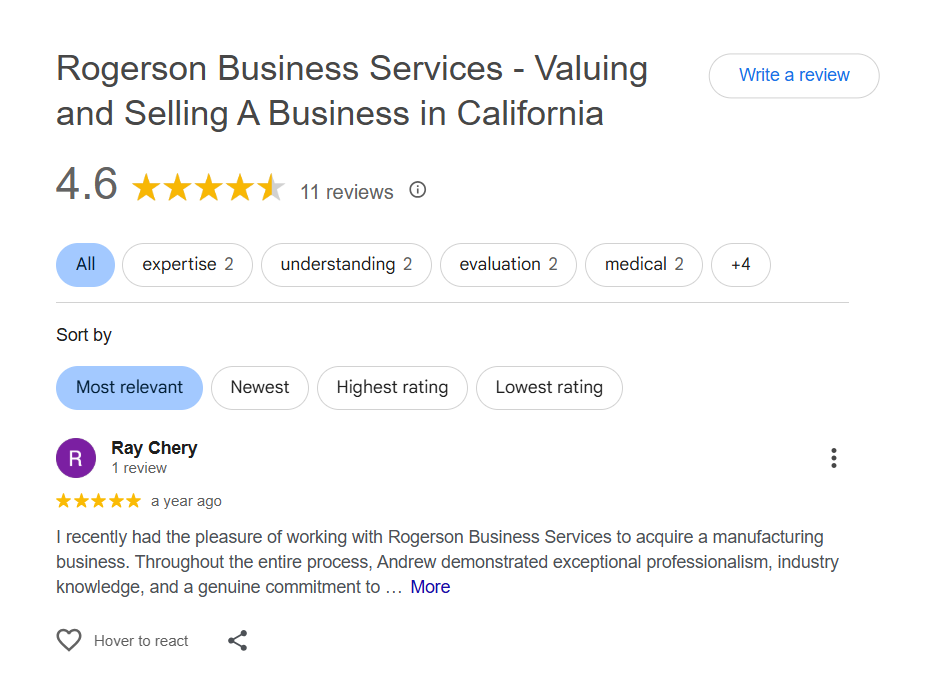
Testimonials
Greg Sheldon
“Andrew, I wanted to say ‘thank you’ for the business coaching and advice you have given me. When I first crossed paths with you, I was extremely confused and full of anxiety about some concerns with my business. After several weekly sessions, you were able to help pull back my ‘layers’ and drill down to the core of my issues, the help me plot a course out of my own personal darkness. Before I knew it, the key problem was out in the open, addressed, solved, and now behind me.I certainly appreciate your direct, albeit gentle, manner of discussing business; you certainly have a knack for listening and swiftly offering up reasonable, logical solutions. I look forward to working with you in the future.
Greg Sheldon – Woodland, CA
See more reviews and testimonials.
Is your business currently operating at the top of its game? Send a free inquiry today! Call Andrew Rogerson, Rogerson Business Services, toll-free (844) 414-9700 | Leave a message – I’ll call you right back
Key Takeaways
- Understand what makes your fire and life safety business valuable in California, focusing on recurring revenue and solid assets.
- Get your business ready for sale by cleaning up your financials and operations and ensuring all licenses and compliance are in order.
- Figure out who the likely buyers are, like competitors or investment groups, and how to attract them.
- Develop a clear plan for your exit, covering deal terms and what happens after the sale.
- Work with local experts, like brokers and lawyers, to manage the sale process smoothly and confidentially in California.
Prefer to watch a video?
Hit play and watch below!
Understanding Your Fire & Life Safety Business Valuation in California

Figuring out what your fire & life safety business is actually worth in California is a big step, and it’s not always straightforward. It’s more than just looking at your bank account; several things play a role in how much a buyer might offer. Andrew Rogerson, who knows a thing or two about selling businesses, points out that understanding these factors early on is key to getting the best deal.
Factors Influencing Fire Protection Company Valuations
When it comes to a fire inspection company valuation, buyers look at more than just your current profits. They want to see stability and potential. Think about your client list – is it diverse, or are you heavily reliant on just a few big accounts? A broad base of clients across sectors such as commercial, industrial, and even multi-family residential generally makes a business more attractive. This diversification reduces risk for the buyer. Also, consider the services you offer. Businesses that provide essential life-safety services, which are often mandated by regulations, tend to have a more predictable demand, making them less susceptible to economic downturns. This inherent stability is a significant plus.
The Impact of Recurring Revenue on Business Worth
This is a huge one for recurring-revenue fire-alarm business models. How much of your income comes from contracts that renew automatically, like annual inspections or maintenance agreements? Buyers love this. It means they can count on a steady stream of income from day one, which makes the business feel much safer and more predictable. A business with a high percentage of recurring revenue, say over 50%, often commands a higher valuation multiple than one that relies mostly on one-off installation projects. It’s like having a built-in safety net for the new owner.
Here’s a general idea of how service mix can affect valuation:
| Service Mix | Revenue Stability | Typical Valuation Multiple (Relative) |
| Mostly Contracted Maintenance & Inspection | High | Higher (e.g., 5–6× SDE) |
| Balanced (Installation + Maintenance) | Moderate | Moderate–Higher (4–5× SDE) |
| Mostly Large-Scale Installations | Variable | Moderate (3–5× SDE, depending on backlog) |
Assessing Tangible and Intangible Assets
Don’t forget your tangible assets – equipment, vehicles, and any real estate you own. These have a clear value. But equally important, if not more so, are your intangible assets. This includes your brand reputation, customer goodwill, proprietary software, documented standard operating procedures (SOPs), and your team’s skills. A strong brand and well-trained staff that can operate efficiently without you being there every minute are incredibly valuable. Buyers are looking for a business that runs smoothly and has a good name in the community. You can get a better sense of market valuation by looking at how similar businesses are assessed using a data-driven approach, as Meridian employs in its scorecard.
Buyers are often willing to pay a premium for businesses that demonstrate operational efficiency, a strong recurring revenue base, and a solid reputation. These elements reduce the perceived risk associated with an acquisition and offer a clearer path to future profitability.
Preparing Your Fire & Life Safety Business for Sale in California
Getting your fire protection company’s sale or alarm monitoring business sale ready for the market is a big step. It’s not just about putting up a sign; it’s about making sure everything is in tip-top shape so you get the best possible price and a smooth transaction. Think of it like getting ready for a big presentation – you want everything to be polished and professional.
Strengthening Financial Records and Operational Efficiency
First off, let’s talk numbers. Buyers will want to see clean, organized financial records. This means keeping your bookkeeping up to date, with clear profit and loss statements and balance sheets. If your records are a mess, it can really scare off potential buyers or lead them to make lower offers. Andrew Rogerson, who’s sold businesses himself, always stresses how important this is. He says that clear financials show a well-run operation.
Here’s a quick checklist:
- Organize all financial statements from the last 3-5 years.
- Review expenses and cut anything that isn’t absolutely necessary for day-to-day operations.
- Ensure all contracts with clients and suppliers are documented and up to date.
- Streamline operations to show efficiency. This could mean updating software or improving workflow for your technicians.
Addressing Compliance and Licensing Requirements
For businesses in the fire & life safety sector, compliance is huge. Whether you’re dealing with a fire suppression company sale or an NFPA compliance business sale, buyers will be looking closely at your adherence to regulations. California has strict rules, and any issues here can be a major roadblock. You need to make sure all your licenses are current and that your business practices meet all state and local requirements. This includes things like:
- Proper licensing for all technicians and the business itself.
- Up-to-date certifications for equipment and services.
- Adherence to all safety and building codes.
Buyers will conduct thorough due diligence, and any compliance red flags can significantly delay or even kill a deal. It’s better to fix these issues proactively before a buyer finds them.
Enhancing Brand Value and Customer Retention
Beyond the numbers and compliance, your brand and customer relationships matter a lot. A strong reputation and loyal customer base make your business much more attractive. Think about how you can show your clients that you’re trusted and keep coming back. This might involve:
- Gathering positive customer testimonials.
- Demonstrating a low customer churn rate.
- Highlighting any unique selling propositions that set you apart from competitors.
A solid customer base with recurring revenue is often one of the most attractive aspects for potential buyers. It shows stability and predictable income, which is gold in any fire protection company sale.
Identifying Potential Buyers for Your California Fire & Life Safety Business
When you decide it’s time to sell your fire and life safety business in California, figuring out who might want to buy it is a big step. It’s not just about finding someone with cash; it’s about finding the right buyer who sees the value you’ve built and can take it forward. Andrew Rogerson, who has sold businesses himself multiple times, often points out that knowing your buyer pool is key to a successful exit.
Understanding Strategic Competitors and Private Equity Interest
Your competitors are often the most obvious potential buyers. They understand your market, your customers, and the challenges you face. A competitor might be looking to expand their market share, acquire new technology, or simply eliminate a rival. Private equity (PE) groups, on the other hand, are looking for businesses with strong, predictable cash flow and growth potential. Your fire and life safety business, with its essential services and often recurring revenue from maintenance contracts, can be very attractive to them. They typically have the capital to make significant acquisitions and are seeking solid returns on their investments.
- Strategic Competitors: May seek to consolidate market share or acquire specific capabilities.
- Private Equity Groups: Often target businesses with stable revenue and clear growth paths.
Attracting Industry-Specific Investors and High-Net-Worth Individuals
Beyond direct competitors and financial buyers, there are other groups to consider. Industry-specific investors might be individuals or smaller companies already operating in a related field, looking to diversify or expand their services. They understand the nuances of the fire and life safety sector. High-net-worth individuals, perhaps successful entrepreneurs themselves, might be looking for a stable, well-established business to add to their portfolio. They may not have direct industry experience, but are attracted to the reliability and necessity of your services.
Aligning Buyer Goals with Your Exit Objectives
It’s not just about who can buy your business, but who should. Think about what you want from the sale.
- Do you want a quick cash exit?
- Do you want the business to continue operating under a similar name and ethos?
- Do you want to ensure your employees are taken care of?
Aligning the buyer’s goals with your own exit objectives is crucial for a smooth transition and a satisfying outcome. A buyer who shares your vision for the business’s future is often a better fit than one who simply offers the highest price but plans to dismantle operations or drastically change the company culture.
Identifying the right buyer involves more than just looking at financial offers. It requires understanding their motivations, their plans for the business, and how those align with your personal and professional goals for exiting.
Developing a Comprehensive Exit Strategy for California

Thinking about selling your fire and life safety business in California is a big step, and having a solid exit strategy in place makes all the difference. It’s not just about finding a buyer; it’s about planning for the future, whether that’s retirement, pursuing new ventures, or something else entirely. Andrew Rogerson, founder of Rogerson Business Services and a seasoned business owner himself, emphasizes that early planning is key. He’s seen firsthand how a well-thought-out strategy can lead to a much smoother and more profitable sale.
The Importance of Early Exit Planning
Starting your exit planning process well before you intend to sell is incredibly smart. Industry pros often suggest giving yourself 1 to 3 years. Why so much time? It gives you the chance to really shore up your business. This means getting your financial records in tip-top shape, ensuring all your operations run efficiently, and addressing any lingering compliance or licensing issues specific to California. Think of it as getting your house ready to sell – you want it looking its best. This preparation not only makes your business more attractive to potential buyers but also helps you get a better valuation. It’s about proactively managing your business’s health so it shines when it’s time to put it on the market.
Navigating Deal Structures and Negotiation Terms
When you get to the negotiation table, the deal structure is just as important as the price. California business sales can get complex, and being flexible can really help. You might consider options like seller financing, where you help the buyer with the purchase over time, or earn-out agreements, where part of the payment depends on the business hitting certain performance targets after the sale. Other possibilities include installment payments or even equity rollovers. It’s also vital to think about whether a stock sale or an asset sale makes more sense for your situation, as this has significant tax implications. Understanding these different structures allows you to bridge valuation gaps and find terms that work for both you and the buyer.
Ensuring a Smooth Post-Sale Transition
Once the deal is done, your involvement doesn’t always end immediately. Buyers, especially those new to the fire and life safety industry in California, often expect some level of support during the transition. This could involve training the new management team, introducing them to your key clients, or providing operational consulting for a short period. Clearly defining these transition terms in your sale agreement is important. It helps the buyer feel confident in taking over and ensures that the business you’ve built continues to thrive under new ownership. A well-managed transition protects the value you’ve created and can make the entire selling experience feel more positive.
Navigating the California Sales Process with Expert Guidance
Selling your fire and life safety business in California involves a complex process, and having the right professionals by your side can make all the difference. It’s not just about finding a buyer; it’s about managing the entire transaction smoothly and getting the best possible outcome for your hard work.
Engaging California Business Brokers and Transaction Attorneys
Think of a business broker as your guide through the sales landscape. They have the connections and the know-how to find qualified buyers and negotiate terms. Andrew Rogerson, founder of Rogerson Business Services, is a seasoned business owner and author who understands the intricacies of selling companies. He emphasizes the importance of working with professionals who know the California market. A good broker will vet potential buyers, ensuring you don’t waste time with those who aren’t serious. Similarly, a transaction attorney specializing in California business sales is indispensable. They’ll handle the legal heavy lifting, from drafting the definitive purchase agreement to ensuring all compliance is met. Having both a skilled broker and a sharp attorney on your team is non-negotiable for a successful sale.
Maintaining Confidentiality Throughout the Sale
Keeping the sale of your business quiet is incredibly important, especially in a connected market like California. If word gets out too early, it can cause instability with your employees, customers, and suppliers. A professional business broker will manage communications and ensure that only serious, vetted buyers are aware of the opportunity. They’ll also make sure non-disclosure agreements are properly signed and enforced. This protects your sensitive financial and customer data. It’s a delicate balance, but one that experienced advisors handle routinely. You want to avoid any disruption to your operations while the deal is in progress.
Strategic Timing for Listing Your Business
When you decide to put your fire and life safety business on the market, it can significantly impact the final price and terms. Market conditions, economic trends, and even seasonal demand for your services play a role. For instance, a business sale might be more attractive to buyers during certain economic cycles. It’s wise to consult with your advisors about the optimal time to list. They can help you assess factors like interest rates and industry-specific demand in California markets. Sometimes, waiting a few extra months can lead to a much better offer. Consider the overall health of the economy and the specific demand for fire protection services when making this decision.
Financial and Legal Considerations When Selling in California
Selling your fire and life safety business in California involves a complex web of financial and legal considerations. It’s not just about agreeing on a price; you need to be prepared for the specific regulations and tax structures unique to the Golden State. Andrew Rogerson, founder of Rogerson Business Services and a seasoned business owner, emphasizes that meticulous attention to these details is what separates a good sale from a great one.
Strategic Tax Planning for Business Sales
California has some of the highest state income tax rates in the nation. This means that how you structure the sale can significantly impact the amount of money you actually walk away with. Without proper planning, a substantial portion of your hard-earned profits could go to taxes. It’s wise to consult with tax professionals who understand California’s tax code to explore options such as asset versus stock sales, depreciation recapture, and potential capital gains tax implications. The goal is to maximize your after-tax proceeds.
- Federal Capital Gains Tax
- California State Income Tax
- Asset vs. Stock Sale Impact
- Depreciation Recapture
Understanding California’s Regulatory Landscape
California is known for its detailed business regulations. From labor laws to environmental requirements and specific industry licensing, you need to ensure your business is fully compliant. Any outstanding issues can halt a sale or lead to significant renegotiations. Buyers will conduct thorough due diligence, scrutinizing everything from employee classifications and wage compliance to permits and licenses. Being proactive in addressing these can streamline the process. For instance, staying up to date on insurance regulations, including those affecting major players in the state’s insurance market, is always a good practice.
Buyers in California are often sophisticated and will meticulously review your business’s compliance history. Any red flags can cause delays or even kill a deal.
Managing Real Estate and Lease Complications
If your fire and life safety business owns or leases property, this aspect can add another layer of complexity. Transferring commercial leases can be challenging, especially in high-demand California markets. Landlords may have specific requirements or require new lease negotiations. If you own the property, you’ll need to decide whether to include it in the sale or sell it separately. Understanding the terms of your current lease and preparing for potential negotiations with your landlord are key to a smooth transaction.
- Lease assignment and landlord approval
- Negotiating new lease terms
- Property valuation and sale strategy
- Environmental compliance for owned property
Wrapping Up Your Sale
So, you’ve put in the work to get your fire and life safety business ready for sale. You’ve figured out it’s worth, found the right people to buy it, and planned how you’ll move on. Selling a business in California isn’t a walk in the park, but by taking these steps, you’re setting yourself up for a much smoother process.
Remember to keep things organized, get good advice, and stay focused on the goal. This is your chance to get a good return on all those years of effort, so make sure you finish strong.
Is your business currently operating at the top of its game? Send a free inquiry today! Call Andrew Rogerson, Rogerson Business Services, toll-free (844) 414-9700 | Leave a message – I’ll call you right back
Frequently Asked Questions
How do I figure out what my fire and life safety business in California is worth?
To find out what your business is worth, you’ll need to consider a few factors. This includes how much money your business regularly earns from contracts, such as inspections or monitoring services, compared to one-time projects. Also, think about all your stuff, like equipment and buildings, and also the less obvious things, like your company’s good name and your relationships with customers. Getting a professional appraisal can really help you get a clear picture.
What makes my fire protection company more valuable to buyers?
Buyers really like businesses with steady income, such as from annual inspection contracts or monitoring services. This kind of recurring revenue shows that your business is stable and predictable. Having loyal customers and a strong reputation also makes your business more attractive. Plus, making sure all your paperwork is in order and your operations run smoothly makes it easier for someone to buy and run your business.
Who typically buys fire and life safety businesses in California?
Several types of buyers might be interested in your business. These could include other fire safety companies looking to grow, private investment groups that buy businesses to improve and resell them, or even wealthy individuals who want to invest in a stable industry. Sometimes, larger corporations might also be looking to add your services to their offerings.
How long does it usually take to sell a business in California?
Selling a business in California can take a while, often from six months to over a year. This is because there’s a lot to do, like getting your business ready, finding buyers, negotiating deals, and handling all the legal and financial details. Being patient and prepared can help you get the best outcome.
What are the most important things to get in order before selling?
Before you put your business up for sale, it’s smart to clean up your financial records and make sure your business operations are running as smoothly as possible. You’ll also want to check that you have all the necessary licenses and comply with all applicable rules and regulations. Improving your company’s reputation and keeping your customers happy will also make your business more appealing to potential buyers.
Why is having a plan for selling my business so important?
Having an exit strategy, or a selling plan, is super important because it helps you get ready well in advance. This means you can fix any problems, make your business look its best, and figure out who might want to buy it. A good plan helps you get the most money for your business and makes the whole selling process much smoother, avoiding surprises along the way.