

By Andrew Rogerson, Founder, Rogerson Business Services
Certified Business Broker (CBB), M&A Master Intermediary (MAMI)
Last updated: May 10, 2026
Author Note: This guide reflects common SMB sell-side practice in California Testing, Inspection, Certification, and Compliance (TICC) business transactions. It is not legal, tax, or investment advice.
Disclaimer: This tutorial provides general information for California sellers in the Testing, Inspection, Certification, and Compliance (TICC) niche. Requirements and forms vary by jurisdiction. Confirm current rules with your regulators and consult qualified legal counsel and environmental professionals for your specific deal.
The Testing, Inspection, Certification, and Compliance (TICC) sector commands premium valuations in today’s market, yet founders often hit a wall during final negotiations. You built your California TICC laboratory or engineering firm on regulatory precision, but translating that operational precision into a definitive purchase agreement requires a completely different skillset.
Once offers come in from buyers interested in acquiring your TICC business, negotiation begins. Too many founders celebrate an attractive Letter of Intent (LOI) headline price, only to watch the transaction unravel over complex legal allocations of liability and structural risks.
Why TICC Deals Stall
In California’s highly regulated landscape—where firms must comply with stringent oversight from agencies like the California Air Resources Board (CARB), Cal/OSHA, and various state environmental protection divisions—buyers bring extreme caution to the table. Transactions routinely stall over two primary friction points: accreditation transfer risk and historical liability exposure.
If a laboratory loses its ISO/IEC 17025 accreditation or state certifications during the ownership transition, the business loses its revenue engine. Consequently, buyers attempt to shift 100% of this operational risk back onto the seller through aggressive indemnity clauses, escrow holdbacks, and contingent deal structures. Many issues carry into the TICC due diligence process, transforming a straightforward asset purchase into a high-stakes standoff.
To protect your wealth and secure a clean exit, you must understand how to balance these risks using sophisticated deal terms. Andrew Rogerson, founder of Rogerson Business Services, leverages his deep experience as a 5-time successful business owner, Certified Business Broker (CBB), and Mergers & Acquisitions Master Intermediary (M&A Master Intermediary) to protect California business owners from these exact pitfalls.
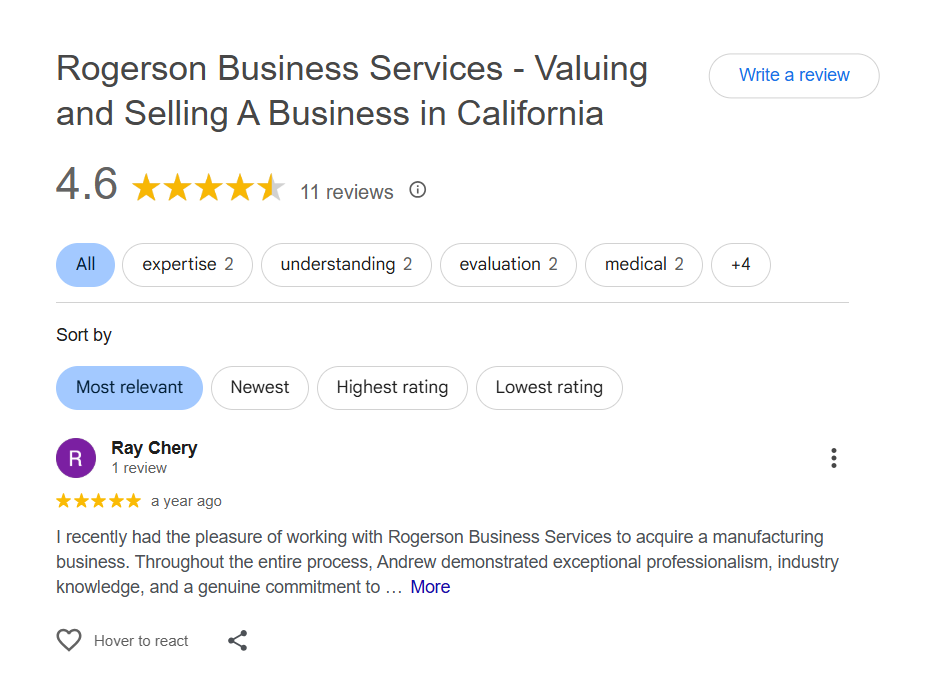
Testimonials
Valerie M. Bruns
“In the last few months I have read or scanned a number of books on selling a business and have to say yours was by far the best. I’m fairly familiar with the nuances of selling a business, but your book is at the head of the herd because it’s not only informative, but it walks a prospective seller thru the actual steps from formulating the decision to sell, researching prospective buyers, due diligence to closing.“
Valerie M. Bruns – Dundee, IL
See more reviews and testimonials.
Is your business currently operating at the top of its game? Send a free inquiry today! Call Andrew Rogerson, Rogerson Business Services, toll-free (844) 414-9700 | Leave a message – I’ll call you right back
The Founder’s Takeaway
In a TICC transaction, the headline purchase price matters far less than the net proceeds at closing. A high offer weighed down by uncapped liabilities and unrealistic performance benchmarks usually yields less cash than a lower, cleanly structured offer.
Key Deal Terms

Negotiating the definitive purchase agreement requires a deep understanding of how specific clauses shift financial exposure between the buyer and the seller. In California’s TICC sector, asset value ties directly to regulatory compliance and operational continuity, so boilerplate contracts fail to protect your wealth.
To secure a clean exit, you must carefully structure four critical deal terms.
1. Earn-Outs & Contingent Financing
Buyers frequently deploy earn-outs to bridge valuation gaps when a seller projects aggressive revenue growth from new testing capabilities or impending laboratory expansions. An earn-out ties a specific portion of the purchase price to post-closing performance metrics.
However, California TICC business owners must exercise extreme caution here. If a buyer alters laboratory workflows or reallocates technicians to other facilities after the sale, your ability to hit those performance metrics diminishes. Because you lose operational control at closing, you should negotiate earn-outs based on gross revenue or testing volume rather than net profit metrics, which a buyer can easily manipulate through corporate overhead allocations.
2. Liability Caps and Indemnification Escrows
Sellers must establish clear limits on their post-closing financial exposure. Buyers routinely demand robust indemnification protection against historical testing errors, structural environmental contamination, or past labor law disputes.
To mitigate this risk, Andrew Rogerson advises California sellers to negotiate a strict “basket” and “cap” structure. The basket serves as a deductible, preventing the buyer from filing frivolous claims over minor operational discrepancies. The cap limits your total exposure to a minor fraction of the purchase price—typically 10% to 15%—rather than leaving your entire net proceeds vulnerable indefinitely.
3. Accreditation Transfer Protocols
Because a TICC business cannot generate revenue without its credentials, the mechanics of transferring certifications dictate the transaction timeline. Regulatory bodies like the ANSI National Accreditation Board (ANAB) and the California Department of Public Health (CDPH) mandate strict change-of-ownership notifications and transitional quality audits.
Your deal structure must explicitly state which party bears the cost of these transitional audits. Furthermore, the contract should include a collaborative transition plan to ensure the laboratory maintains continuous compliance under ISO/IEC 17025 guidelines throughout the closing sequence.
4. Key Employee Retention Agreements
In California, a laboratory’s value resides heavily in its human capital, specifically its technical directors, field inspectors, and quality managers. If key personnel depart immediately after the sale, the business risks losing its operational certifications.
Because California Business and Professions Code Section 16600 voids standard employee non-compete covenants, buyers cannot simply force your team to stay. Instead, you must structure competitive retention agreements. These agreements use buyer-funded, performance-based stay bonuses negotiated during the transaction, which stabilize the workforce and de-risk the transition for the incoming owner.
TICC Deal Terms: Risk Matrix & Mitigation
The table below outlines how these key deal terms operate inside a standard California TICC transaction, along with professional mitigation strategies:
| Deal Term | Standard Buyer Position | Seller’s Risk Exposure | Recommended Mitigation Strategy |
| Earn-Out Structure | Back-ended cash tied to post-sale Net EBITDA targets. | Buyer alters laboratory operations, suppressing net profitability. | Tie payouts to Gross Revenue or specific Testing Volumes. |
| Liability Caps | Uncapped indemnity for environmental and testing liabilities. | Claws back total purchase price years after closing. | Limit caps to 10-15% of deal value with a 12-to-24-month survival limit. |
| Accreditation Risk | Purchase price reduction if certifications lapse prior to closing. | Operational delays outside the seller’s control kill the deal. | Insert a cooperation clause establishing a joint transition committee. |
| Staff Retention | Demands restrictive post-closing employment covenants. | Violates California labor laws, rendering the clause unenforceable. | Deploy structured stay bonuses paid out over a 12-month period. |
Expert Resource: Balancing the Scales
Through authoring four books on business ownership and guiding hundreds of transactions in California, Andrew Rogerson emphasizes that ethical, transparent structural balancing prevents litigation. Review the International Business Brokers Association (IBBA) deal-structuring standards to understand how market-rate caps protect your post-closing wealth.
Managing Risk
Mitigating operational and legal risks during a California TICC transaction requires meticulous preparation, as state regulators enforce uncompromising compliance standards. Sellers often overlook latent liabilities until they enter the intensive TICC due diligence process, where sophisticated buyers systematically dissect every operational vulnerability. To safeguard your wealth, you must proactively insulate your post-closing life from historical laboratory liabilities.
Navigating California’s Regulatory Minefield
California TICC facilities handle volatile chemicals, manage hazardous waste, and issue legally binding safety certifications. Consequently, state agencies like the California Department of Toxic Substances Control (DTSC) and local Certified Unified Program Agencies (CUPAs) closely monitor these operations. If your testing facility violates chemical storage disposal protocols or miscalibrates critical machinery prior to the sale, the financial fallout can obliterate your net proceeds unless your definitive agreement explicitly defines the cutoff dates for these liabilities.
Furthermore, California’s strict liability framework means that you can remain legally responsible for environmental contamination or faulty test results years after you hand over the keys. Buyers recognize this exposure, so they attempt to insert broad indemnity clauses that pierce your corporate veil.
[LOI Headline Price]
│
▼ (Minus)
[Pre-Closing Remediation Costs]
│
▼ (Minus)
[Indemnification Escrow Holdbacks]
│
▼
[Actual Net Proceeds at Closing]
Strategic Risk Mitigation Framework
To neutralize these threats and retain your negotiating leverage, you must deploy a proactive defense strategy. Andrew Rogerson leverages his elite training as a Mergers & Acquisitions Master Intermediary (M&A Master Intermediary) to protect sellers through a three-tiered risk management framework:
- Execute Pre-Due Diligence Audits: Hire independent, third-party specialists to audit your ISO/IEC 17025 compliance and environmental systems before listing your business. Resolving minor discrepancies early prevents buyers from demanding massive price reductions later.
- Structure Clear Cutoff Dates: Utilize a “Representation and Warranty” survival period. Limit your liability for historical testing certifications to a maximum of 12 to 24 months post-closing, rather than agreeing to an indefinite exposure window.
- Deploy Representation & Warranty (R&W) Insurance: For mid-market TICC deals, require the buyer to purchase R&W insurance. This financial tool shifts the risk of accidental breaches from your personal bank account to a third-party underwriter, which facilitates a clean break.
Regulatory Call-Out: California Civil Code Section 2778
California courts interpret indemnity agreements strictly under Civil Code Section 2778. Unless your contract explicitly states otherwise, an indemnity clause automatically obligates you to defend the buyer against claims the moment they arise. Work with an experienced M&A broker to write precise language that excludes defense costs for unproven, third-party claims.
The Partner Resource
Review the California Governor’s Office of Business and Economic Development (GO-Biz) environmental compliance resources to verify that your testing laboratory complies with all current state mandates before starting the transaction sequence.
Retention Agreements
Because a TICC business operates on technical expertise and regulatory credentials, your human capital is your most valuable asset. Buyers rarely purchase a laboratory solely for its physical equipment; instead, they buy the operational continuity your staff ensures. If your key personnel leave during the transition, the business risks losing its certifications, which instantly devalues the company. Therefore, securing key employee retention agreements is a vital component of successfully closing your TICC business sale.
The Vulnerability of California TICC Personnel
In the TICC sector, specific roles carry disproportionate weight. For instance, regulatory bodies require a designated Technical Director or Quality Manager to sign off on lab results. If this specific individual resigns, your facility must halt operations until you recruit a qualified replacement and secure state approval.
Compounding this risk, California enforces unique legal hurdles regarding employee mobility. Under California Business and Professions Code Section 16600, non-compete agreements for standard employees are completely void. You cannot legally forbid your top chemists, engineers, or inspectors from walking out the door to join a direct competitor. Consequently, you must motivate them to stay using financial incentives rather than legal restrictions.
[Key Personnel Resignation]
│
▼
[Loss of ISO/IEC Accreditation]
│
▼
[Immediate Operational Halt]
│
▼
[Transaction Collapse / Valuation Clawback]
Structuring Effective “Golden Handcuffs”
To stabilize your workforce during a sale, you must design a structured stay bonus program well before finalizing the transaction. Andrew Rogerson advises sellers to collaborate with buyers to fund a dedicated retention pool, thereby aligning employees’ interests with the new ownership group.
Consider the following structural elements when designing these agreements:
- Tiered Payout Milestones: Avoid paying retention bonuses in a single lump sum at closing. Instead, distribute the funds over a 12- to 24-month horizon (e.g., 30% at closing, 30% at six months, and 40% at the one-year anniversary). This structure encourages long-term operational stability.
- Clear Funding Allocation: Explicitly negotiate who funds the retention pool during the initial LOI stage. Buyers often request that sellers carve these bonuses out of the gross purchase price, yet sellers can successfully argue that the buyer should absorb this cost as part of their post-closing working capital.
- Strategic Communication Timing: Disclosing a pending sale too early can spark panic and trigger pre-emptive resignations. Work with your business broker to draft a precise communication timeline, disclosing the transaction to key staff only after the buyer has cleared major due diligence hurdles.
The Founder’s Takeaway
Do not treat your key staff as line items in an asset purchase agreement. Treat them as active stakeholders in the transition. Offering a well-structured stay bonus honors their contribution to your company’s legacy while simultaneously protecting your net proceeds from an unexpected post-closing staff exodus.
HR and Legal Compliance Resource
Review the guidelines issued by the California Department of Industrial Relations (DIR) to ensure your stay-bonus agreements comply with all state wage-and-hour laws and prevent accidental labor disputes during the business transition.
Maximizing Value When Closing Your TICC Business Sale
Successfully navigating the final phases of a transaction requires a balance of legal precision and strategic patience. The work you invest in structuring earn-outs, capping liabilities, and securing key personnel directly dictates your final walkaway wealth. Minor oversights in the definitive purchase agreement can expose you to protracted legal disputes or unexpected financial clawbacks long after the transaction concludes.
The Final Stretch: Moving From LOI to Closing
Once you and the buyer agree on the foundational deal terms, the transaction transitions into the final, intensive legal drafting phase. This stage translates the conceptual terms of the Letter of Intent (LOI) into binding legal obligations. In California, where regulatory scrutiny is exceptionally high, this process demands seamless coordination between your transaction attorneys, CPAs, and M&A intermediaries.
To maintain your negotiating leverage during this high-stakes period, avoid checking out of daily operations. Buyers monitor late-stage operational performance closely; a sudden dip in testing volumes or a temporary regulatory delay can prompt a buyer to re-negotiate the purchase price at the eleventh hour.
Pre-Closing Checklist for California TICC Owners
Before signing the final purchase agreement, verify that your deal team confirms the following critical components:
- Indemnity Alignment: Ensure all historical environmental and operational liabilities match the negotiated caps (10% to 15%) and include a firm 12-to-24-month expiration date.
- Escrow Clarity: Verify that the indemnification escrow holdback is held by an independent, neutral third-party escrow agent, rather than remaining under the buyer’s operational control.
- Transition Milestones: Confirm that the definitive agreement outlines a realistic timeline for joint transition committee meetings to manage ISO/IEC 17025 compliance transfers without operational gaps.
- Executed Stay-Bonuses: Finalize and execute the tiered stay-bonus agreements with your Technical Director and key quality managers to eliminate post-closing resignation risks.
Statutory Authority: California Department of Real Estate (DRE)
In California, asset sales involving corporate transitions and commercial lease assignments are subject to strict real estate and business brokerage regulations. Verify that your advisory firm maintains active licensure with the California Department of Real Estate (DRE) to ensure your transaction complies fully with state regulatory frameworks.
Secure Your Legacy with Expert Guidance
You only get one chance to sell your TICC business. Safeguarding the enterprise value you spent decades building requires an advisor who understands how to counter aggressive buyer tactics and structure airtight agreements.
Andrew Rogerson combines the elite credentials of a Certified Mergers & Acquisitions Professional (CM&AP) and a Mergers & Acquisitions Master Intermediary (M&A Master Intermediary) with the practical wisdom of a 5-time successful business owner. By applying proven, ethical deal-structuring methodologies, Rogerson Business Services ensures you exit your company on your own terms while fully protecting your hard-earned wealth.
Don’t let aggressive liability clauses or unmitigated transition risks erode your net proceeds. Secure your financial future and transition your laboratory with complete confidence.