
By Andrew Rogerson, Founder, Rogerson Business Services
Certified Business Broker (CBB), M&A Master Intermediary (MAMI)
Last updated: May 10, 2026
Author Note: This guide reflects common SMB sell-side practice in California Testing, Inspection, Certification, and Compliance (TICC) business transactions. It is not legal, tax, or investment advice.
Disclaimer: This tutorial provides general information for California sellers in the Testing, Inspection, Certification, and Compliance (TICC) niche. Requirements and forms vary by jurisdiction. Confirm current rules with your regulators and consult qualified legal counsel and environmental professionals for your specific deal.
Imagine this scenario: You spent decades building a premier Testing, Inspection, Certification, and Compliance (TICC) firm in California. You decide to exit the market, but an unexpected information leak triggers immediate panic among your specialized engineering staff. Because your business relies on highly technical personnel to maintain strict state and international certifications, this single leak threatens your operational stability. Key clients hear rumors, competitors exploit the uncertainty, and your regulatory accreditations are suddenly in jeopardy.
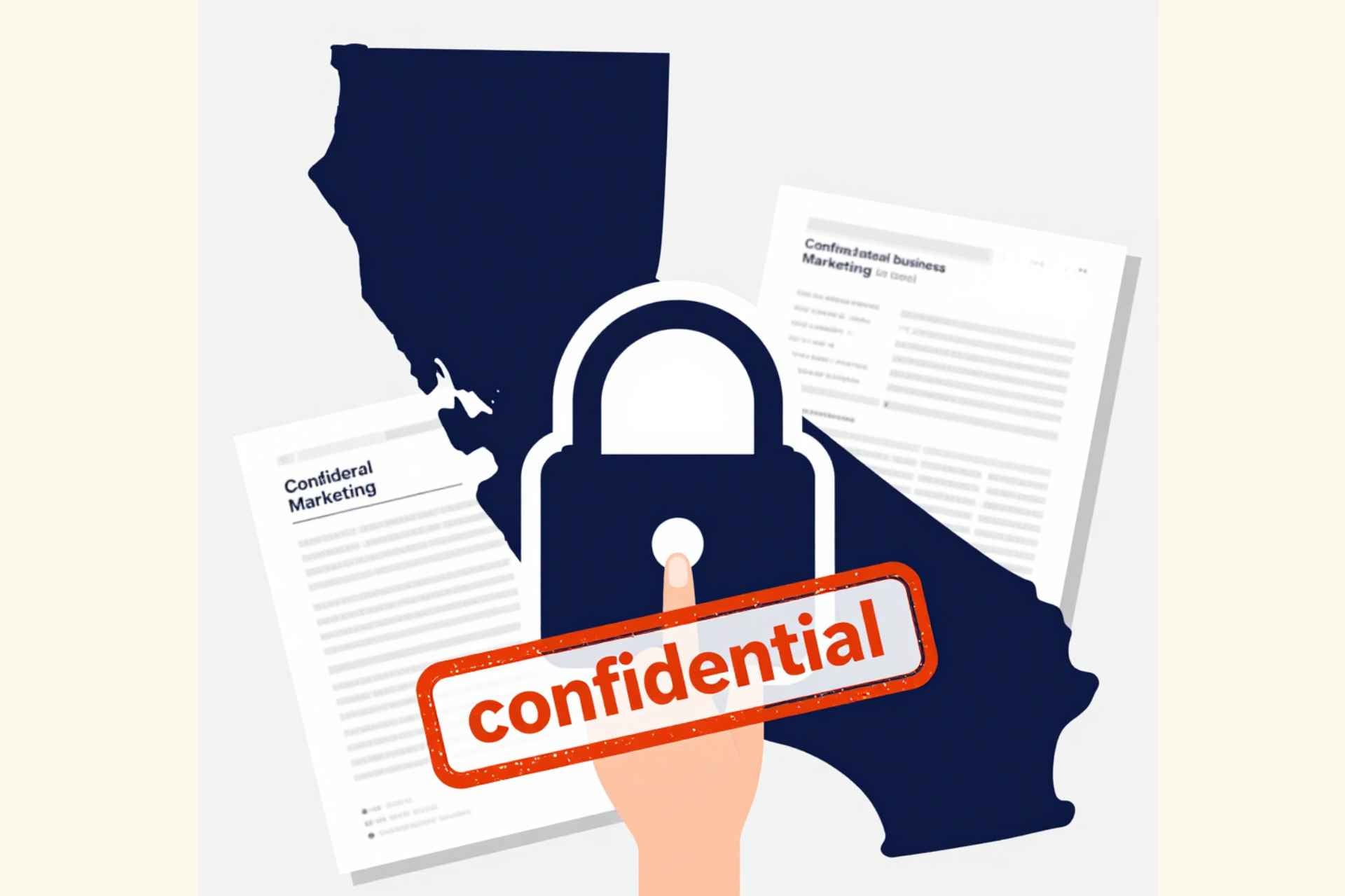
This high-stakes standoff reflects the reality California TICC founders face. In this sector, operational transparency during a sale can destroy enterprise value overnight. Before launching a public offering, savvy business owners protect their legacy by executing an airtight stealth marketing strategy.
Testimonials
Mike and Sue Hickok
“We sincerely appreciate Andrew’s help and support throughout the process of selling our business. His knowledge and intuition when dealing with the various buyers was invaluable. While we did not have a large, complicated transaction, Andrew still made us feel important, always communicating and making sure we were as comfortable as possible with the process. We highly recommend Andrew to anyone in need of a business broker. We enjoyed working with him and are glad he came highly recommended to us!“
Mike and Sue Hickok –
See more reviews and testimonials.
Is your business currently operating at the top of its game? Send a free inquiry today! Call Andrew Rogerson, Rogerson Business Services, toll-free (844) 414-9700 | Leave a message – I’ll call you right back
Why Confidentiality Matters

Maintaining absolute discretion during the sale of a TICC company protects more than just pride; it directly preserves your financial valuation. Unlike traditional service businesses, TICC firms operate within strict, compliance-driven ecosystems where corporate buyers evaluate risk as heavily as revenue.
Protecting Regulatory Accreditations and Staff Stability
California TICC firms often hold specialized accreditations from bodies like the California Air Resources Board (CARB) or the ANSI National Accreditation Board (ANAB). These certifications require specific, licensed personnel to remain on staff. If your technicians or laboratory managers discover a potential sale through unverified gossip, they may seek employment elsewhere to guarantee their job security. This talent flight can invalidate your operational compliance, rendering the business unmarketable.
Preventing Client Attrition and Competitor Exploitation
Enterprise clients look for absolute certainty and long-term continuity when selecting a compliance partner. If news of an impending sale leaks, your competitors will immediately target your account base, using the transition as a sign of instability. Consequently, clients may pause upcoming testing contracts or migrate to alternative providers to avoid potential disruptions.
To mitigate these severe risks, sophisticated business owners implement institutional-grade security protocols. Before launching, many owners work with a TICC M&A advisor.
Andrew Rogerson, the founder of Rogerson Business Services, understands these specific industry pressures. As a 5-time successful business owner, author of four books on business ownership, and a vetted industry expert, Rogerson holds elite credentials as a Certified Business Broker (CBB), Certified Mergers & Acquisition Professional (CM&AP), and Mergers & Acquisition Master Intermediary (M&AMI). His strategic, ethical approach ensures that California TICC owners navigate the complex intersection of regulatory compliance and corporate divestment without exposing their confidential intent to the public marketplace.
Key Takeaway
In the TICC sector, confidentiality acts as an operational shield. A public leak does not just disrupt negotiations—it actively devalues your proprietary testing methodologies, destabilizes your workforce, and jeopardizes critical regulatory standings.
| Risk Factor | Impact of a Public Leak | Confidential Mitigation Strategy |
| Key Personnel | Staff panic, headhunting by rivals, loss of essential certifications. | Restrict identity access to deeply vetted, non-binding initial offers. |
| Client Contracts | Contract non-renewals, delayed inspection pipelines and revenue loss. | Market the firm using blind, non-identifying operational profiles. |
| Competitor Tactics | Aggressive poaching, predatory marketing targeting your accounts. | Utilize multi-stage Non-Disclosure Agreements (NDAs) with strict legal penalties. |
Positioning Your Business
To sell a TICC business without exposing its identity, you must alter how you display its financial and operational health to the market. Instead of listing your corporate name or specific laboratory addresses, you must emphasize compliance-driven revenue streams. High-quality corporate buyers view consistent regulatory demand as a premium asset, so you should highlight your multi-year testing contracts and recurring certification cycles.
In California, strict state mandates create built-in, unyielding demand for environmental, aerospace, and agricultural testing. For instance, laboratories that track compliance for the California Environmental Protection Agency (CalEPA) or the State Water Resources Control Board have highly predictable revenue models. When you strip away geographic identifiers and client names, you frame the business as a systematic cash-flow engine. Strong positioning improves the negotiation of a TICC business sale by shifting the buyer’s focus from localized operational risks to institutional value.
Masking Identity Through Anonymized Marketing Profiles
Your M&A advisor constructs a “blind profile” or a non-disclosure teaser. This document outlines your firm’s financial capabilities without disclosing its exact location or proprietary methodologies.
For example, a California-focused teaser might describe your firm as a “Southern California-based Materials Testing Laboratory specializing in FAA and aerospace compliance, boasting an 85% recurring contract rate.” This description provides enough technical detail to attract qualified buyers, yet it completely conceals your specific identity from your staff and competitors.
Pro-Tip: The “Blinded” Metric Strategy
When describing your equipment and facility assets, aggregate your capacities. Instead of stating, “We operate three Thermo Fisher mass spectrometers in Sacramento,” write, “The facility utilizes state-of-the-art chromatography and spectrometry setups capable of handling 15,000 environmental samples annually.” This protects your specific operational footprint while showcasing your scale.
Buyer Targeting
Broad marketing campaigns destroy confidentiality, so you must deploy a highly targeted, surgical outreach strategy. You target only pre-qualified buyers who have the financial capacity and strategic intent to close the transaction efficiently. These buyers typically include larger international TICC conglomerates expanding their footprint into the regulatory-heavy California market, or private equity firms building a specialized testing platform.
Before you reveal any proprietary details, you must enforce a multi-stage vetting process. Andrew Rogerson filters prospects through strict financial and operational criteria before they ever view an anonymized teaser document.
[Buyer Inquiry] ➔ [Financial & Operational Vetting] ➔ [California-Governed NDA] ➔ [Blind Profile Release]
Prospects must execute a legally binding, California-governed Non-Disclosure Agreement (NDA). Furthermore, they must provide verifiable proof of funds or institutional backing. Once you verify their credentials, you can safely move into deal negotiations without alerting the broader market. This rigorous screening ensures that buyers realistically prepare for due diligence while you keep your sensitive corporate data safe.
The Screening Checklist
To maintain complete operational safety, your advisory team must grade every prospective buyer against an institutional framework before releasing the Confidential Information Memorandum (CIM).
- Financial Capability: Do they possess liquid equity capital or a committed credit facility verified by a reputable investment bank?
- Strategic Fit: Do they currently operate adjacent testing laboratories, or do they seek a platform acquisition to enter the California compliance landscape?
- Competitor Threat Assessment: If the inquirer is a direct local competitor, what specific firewalls must you implement to prevent them from weaponizing your operational data during the discovery phase?
CIM Creation
Your M&A advisor compiles your firm’s operational histories, audited financial statements, and regulatory achievements into a comprehensive Confidential Information Memorandum (CIM). Because this document contains the core operational details of your testing or inspection firm, you must control its distribution with extreme care. Andrew Rogerson structures the CIM to highlight adjusted EBITDA, normalized cash flow, and recurring certification revenue while successfully withholding specific client names, proprietary chemical formulas, and exact laboratory addresses.
In the TICC sector, a poorly drafted CIM can inadvertently expose your identity. If your document states the exact square footage of a specialized radiochemical testing lab in Sacramento, savvy buyers can easily identify your facility through simple public property searches. To prevent this, your advisory team aggregates physical asset data and presents geographic metrics at a broader regional level. This methodology satisfies institutional buyers yet firmly protects your anonymity.
The Controlled Information Release Framework
You do not hand over your entire corporate operational history at the first sign of buyer interest. Instead, you deploy a phased, multi-stage information release system. This gated approach protects your most sensitive data until the buyer demonstrates maximum financial commitment.
If a buyer passes initial financial verification, they review the anonymized teaser. Once they execute a robust NDA, they unlock the sanitized CIM. However, you must withhold highly sensitive trade secrets—such as specialized proprietary testing software or high-value multi-year defense contracts—until the buyer submits a formal Letter of Intent (LOI) and you progress further into the transaction.
This progressive security architecture aligns with the California Uniform Trade Secrets Act (CUTSA). If negotiations stall or fall apart, CUTSA provides clear legal remedies to penalize any unauthorized use of your proprietary data, provided you took documented steps to protect it during the discovery phase.
Managing the Virtual Data Room (VDR) Safely
When you enter the final phases of disclosure, you migrate all corporate documents into an institutional-grade Virtual Data Room (VDR). A secure VDR provides you with absolute control over your sensitive compliance data.
- Granular Access Control: Disable printing, downloading, and copying functions for ultra-sensitive compliance manuals and employee rosters.
- Dynamic Watermarking: Embed the specific buyer’s email address, IP address, and access timestamp across every single page of your financial records.
- Real-Time Audit Logs: Monitor exactly which pages a prospective buyer reviews, how long they linger on specific compliance data, and when they access the portal.
Critical Warning
Never upload an unencrypted list of your key technical personnel or certified inspectors into the VDR during the early stages of a review. Competitors often masquerade as buyers simply to execute talent-poaching campaigns targeting scarce California-certified laboratory managers.
The Result: Maximum Value Protection
When you execute an airtight, stealth-marketing framework, you achieve two critical objectives: you insulate your ongoing operations from destabilizing market gossip, and you attract institutional buyers who respect professional deal hygiene. Private equity firms and corporate buyers actively seek out cleanly managed, confidential listings because these structures signify an elite, well-advised operation.
In California’s competitive compliance landscape, executing an exit with zero market leakage preserves your full enterprise value. Your specialized engineering staff continues to conduct inspections without distraction, your enterprise clients remain loyal, and your regulatory standing stays completely secure. Ultimately, this meticulous process transforms a high-risk corporate transition into a smooth, lucrative divestment. You protect your hard-earned corporate legacy while forcing serious buyers to compete for your asset on your own terms.
Next Step
Selling a specialized California compliance asset requires more than a standard business broker; it demands an intermediary who thoroughly understands the technical nuances of the TICC sector. Andrew Rogerson brings decades of transactional experience, elite industry credentials, and an unyielding commitment to absolute confidentiality.
By shielding your operational data and systematically filtering out unqualified inquiries, Rogerson Business Services ensures that you navigate the market safely. Do not allow an accidental information leak to compromise your certifications or deplete your enterprise value. Take control of your transition, safeguard your laboratory operations, and partner with a proven intermediary who understands how to navigate the complex California regulatory environment.