

By Andrew Rogerson, Founder, Rogerson Business Services (California M&A advisory)
When negotiating the sale of a fire and life safety business, owners must understand the specific levers that drive deal advisory and enterprise value.
Last updated: April 27, 2026
Author Note: This guide reflects common SMB sell-side practices in California Fire & Life Safety business transactions. It is not legal, tax, or investment advice.
Disclaimer: This tutorial provides general information for California sellers in the Fire & Life Safety niche. Requirements and forms vary by jurisdiction. Confirm current rules with your regulators and consult qualified legal counsel and professionals for your specific deal.
Testimonials
Galen Power
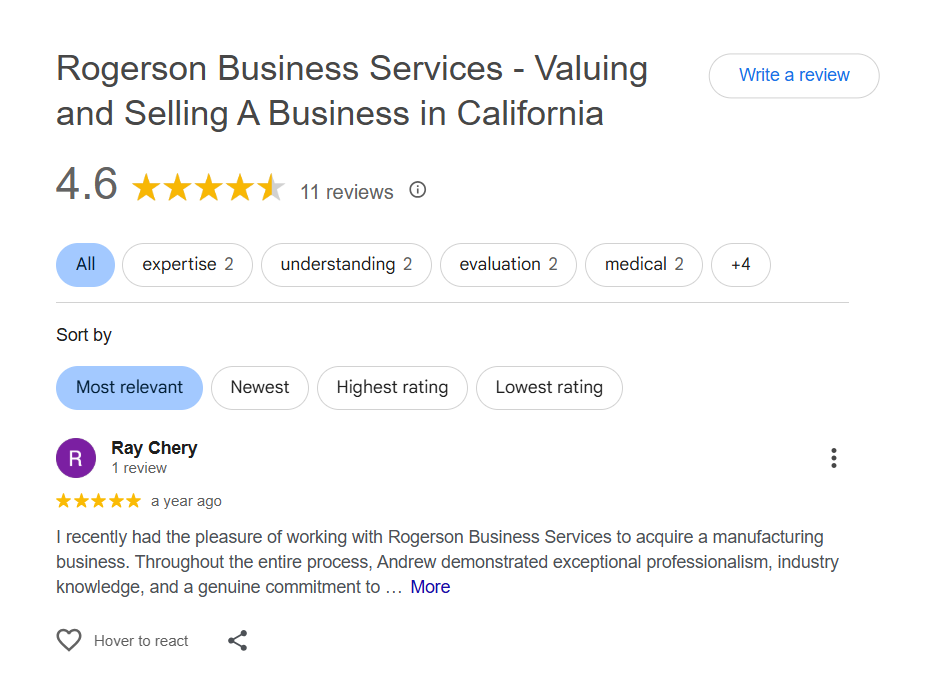
“Andrew was amazing and very knowledgeable. He completed a professional business valuation for me, and I was very impressed with his detail, and the amount of work he put into it. It was definitely worth every penny. Even afterward Andrew was willing to chat with me on the phone a number of times and answer follow-up questions I had via email for no extra charge. All around he is a really nice guy, super professional, knowledgeable, and from what I have seen the best in the business. He has many resources on his website that I also found to be very helpful. Thank you, Andrew!“
Galen Power – CEO/President – Powers Roof Service
See more reviews and testimonials.
Is your business currently operating at the top of its game? Send a free inquiry today! Call Andrew Rogerson, Rogerson Business Services, toll-free (844) 414-9700 | Leave a message – I’ll call you right back
Key Takeaways
- Balance Risk and Reward: Successful negotiations in fire protection require balancing high EBITDA multiples against potential long-term liability exposure.
- Structure is King: Negotiating the “how” (earn-outs and holdbacks) matters as much as the “how much” (purchase price).
- California Context: Sellers must navigate specific California indemnity standards, the Automatic Renewal Law (ARL), and C-16 licensing requirements that impact deal closing.
Complexity Beyond the Price Tag

You have successfully grown your California fire protection company, and a qualified buyer has finally placed a Letter of Intent (LOI) on your desk. While the headline price meets your expectations, the complexity of the terms creates immediate friction.
In the fire and life safety industry, buyers do not just purchase your equipment and inventory; they acquire your recurring service contracts and, more importantly, your historical liability. Because your company ensures the safety of buildings and lives, the “fine print” regarding contract guarantees and indemnification often carries more weight than the purchase price itself.
You may feel overwhelmed as the buyer’s counsel pushes for aggressive holdbacks or broad liability exposure, yet you must remain objective to protect your hard-earned equity.
The Standoff Over Service Guarantees
In a recent California M&A negotiation, a prominent fire alarm company owner faced a significant hurdle that nearly tanked the transaction. The buyer, a private equity-backed strategic consolidator, offered a premium multiple based on the seller’s high percentage of recurring monitoring revenue. However, the deal stalled during the final stages of the purchase agreement.
The standoff began when the buyer demanded a 24-month guarantee on all existing service contracts. They insisted that if any major commercial client canceled their contract within two years of the closing, the seller would forfeit a portion of the sale proceeds. Furthermore, the buyer sought unlimited liability exposure for any system failures related to installations completed before the sale.
The seller felt trapped. He knew his installations were high quality, but he could not control a client’s future business decisions or the unpredictability of litigation. The negotiations grew tense, and both parties prepared to walk away from the table.
Strategic Structuring & Regulatory Due Diligence
To resolve a negotiation standoff, the parties must shift their focus from the purchase price to the deal structure and compliance hurdles. In California’s high-stakes M&A fire safety landscape, specific financial and legal instruments bridge the gap between a buyer’s risk and a seller’s reward.
1. Leveraging Earn-outs to Offset RMR Risk
The buyer and seller negotiated an earn-out to address concerns over service contract guarantees. In California, this is particularly critical due to the Automatic Renewal Law (AB 2863), which, as of July 2025, requires strict “affirmative consent” for recurring contracts.
- The Resolution: Instead of a flat penalty for client attrition, we structured a performance-based payout. If the recurring monthly revenue (RMR) maintained a specific threshold—proving the contracts were legally compliant and defensible—the seller received the full earn-out. This transformed a contentious guarantee into a collaborative goal.
2. Navigating the CSLB C-16 License Hurdle
A major “deal-killer” in California is the assumption that a contractor’s license transfers with the business. Under CSLB rules, C-16 (Fire Protection) licenses are generally not transferable between entities.
- The Strategy: We structured the deal to allow the buyer time to qualify for their own license or, in the case of a corporate merger, utilized the specific reassignment provisions under Business and Professions Code § 7075.1. Proactively addressing this prevents the buyer from demanding a “fire sale” price due to a pending lapse in legal operating authority.
3. Establishing Liability Caps and OSFM Compliance
Because fire protection involves life-safety risks, liability caps serve as a critical shield for the seller. We negotiated a “basket” and a “cap” for indemnification claims, specifically tailored to California’s strict indemnity standards.
- OSFM “Concern” Licenses: We ensured all portable fire extinguisher “Concern” licenses were accounted for. Under Title 19 of the California Code of Regulations, these are location-specific and require new applications upon a change of ownership.
- The Cap: The seller’s total liability for past installations remained limited to a fixed percentage of the purchase price (typically 10% to 20%), rather than an unlimited amount. We also introduced Representations and Warranties Insurance (RWI) to cover the buyer’s risk, allowing the seller to exit with more cash at closing.
4. Seller Financing as a “Confidence Signal”
To demonstrate “skin in the game,” the seller agreed to a portion of seller financing for fire protection. By carrying a 10% promissory note for the deal, the seller signaled his confidence in the company’s historical quality of work. In California, this also offers the seller significant tax advantages by deferring capital gains across multiple years.
The Result: A Protected Exit
By applying these expert deal-structuring techniques and addressing California-specific mandates early, the parties broke the deadlock. The seller protected his retirement funds from unlimited future claims, and the buyer gained the regulatory security required to justify a premium EBITDA multiple. They signed the final purchase agreement, and the transaction closed successfully.
Secure Your Legacy with Expert Deal Advisory
Successfully negotiating a fire protection business sale requires more than just a high asking price; it demands a strategic shield against future liabilities and regulatory pitfalls. In California’s rigorous 2026 legal environment, sellers must proactively manage risk through precise contract language and savvy financial structures.
Andrew Rogerson, the founder of Rogerson Business Services, brings unparalleled expertise to these complex transactions. As a 5-time successful business owner and the author of four books on business ownership, Andrew understands the emotional and financial weight of an exit. He holds prestigious industry credentials, including Certified Business Broker (CBB), Certified Mergers & Acquisition Professional (CM&AP), and Mergers & Acquisition Master Intermediary (M&AMI). His ethical, hands-on approach ensures that California business owners navigate the M&A process with confidence and clarity.
Essential California Resources for Your Deal
Before you sign any definitive agreement, review these specific California mandates that impact fire safety valuations:
- Contract Compliance: Ensure your RMR agreements meet the 2025 California Automatic Renewal Law (AB 2863) standards for express affirmative consent.
- Licensing Requirements: Verify the CSLB C-16 Fire Protection and OSFM Title 19 transfer protocols to avoid operating lapses.
- Antitrust Awareness: Prepare for the California Uniform Antitrust Premerger Notification Act (SB 25) if your transaction meets the 2026/2027 state-level filing thresholds.
Because the fire and life safety niche involves high-stakes service contracts, you must verify every detail before concluding the transaction. A single overlooked clause regarding indemnification or a non-compliant monitoring contract can erode years of profit.
Check out: → Due Diligence Checklist
Don’t leave your retirement to chance or settle for unfavorable terms. Whether you face a standoff over earn-outs, fire alarm company clauses, or need to establish liability caps through M&A negotiation, fire safety expertise, and professional advisory services make the difference between a failed deal and a life-changing exit.