

By Andrew Rogerson, Founder, Rogerson Business Services (California M&A advisory) When considering an Environmental M&A Advisor vs. a Generic Broker, it’s important to understand the differences between these roles in the context of business acquisitions.
Last updated: March 28, 2026
Author note: This guide reflects common SMB sell-side practice in California fire & safety services transactions. It is not legal, tax, or investment advice.
Thinking about selling your fire protection business in California? It’s a big step, and having a solid plan makes all the difference. You’ve put in the work to build your company, and now it’s time to think about how you’ll exit. This guide will help you figure out the best way to move forward, covering everything from finding the right buyer to dealing with California’s specific rules.
Let’s get you ready for a smooth sale.
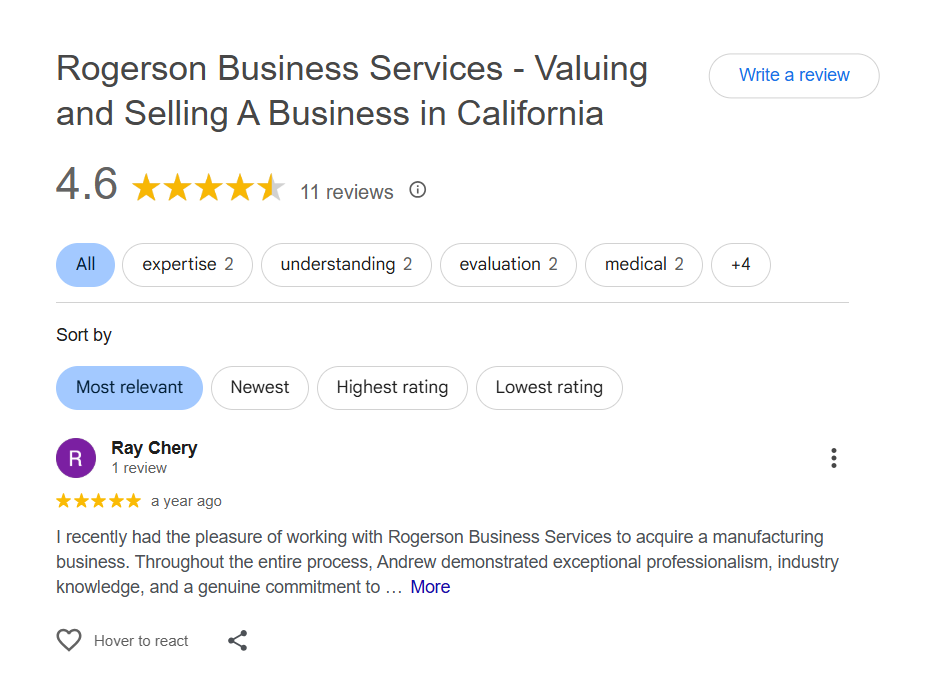
Testimonials
Erin Higgins
“After 10 years of owning and operating a service company I was burned out and ready to move on. Luckily I met Andrew Rogerson at a business meeting and expressed my interest in his services.
From day one, Andrew was always polite, patient, and professional. Shortly after I listed the business with Andrew a buyer expressed interest in my company. The buyer was very demanding, had many questions, and required a lot of information from me. Not only did Andrew work endless hours as a liaison between the buyer and me, he helped me put the buyers requests in perspective and work through his demands. He always kept a positive outlook and kept things moving forward. He was supportive and thoroughly understands that selling a business that you built from the ground up is an emotional experience. It helps that Andrew has built and sold his own businesses throughout his life so he can definitely relate. He also really understands “the people part” of the business transaction, not just the transaction.
Some of the amazing work that he did:
- Andrew was there every step of the way. He set agendas, attended, and moderated all the meetings I had with the buyer which helped me feel more prepared and comfortable.
- He promptly relayed important information from the buyer and took the time to discuss any requests and made sure I understood exactly what I needed to do.
- He worked endlessly to answer questions from the buyer for five months without any guarantee of a sale.
- We had lunch and evening meetings to discuss the buyer’s offer and he helped me negotiate terms.
- He supported me throughout the process but was really there for me during the last week before we closed. With the demands of running my business, the requests from the buyer, his attorney, and my own attorney, I was feeling very stressed and felt like I was sinking. Andrew came to my office and helped me with the requests from the buyer – he even took some of the work off my hands, took it home, and worked on it.
- He was with me to the end and attended the closing at the buyer’s attorney’s office. It felt good to have him there because I knew he was looking out for me.
- Andrew continued to follow up with me while I worked for the buyer for the required time to make sure things were going well.
- I always felt that he was genuine and truly cared about what was best for me, every step of the way.
In the end, my business was sold for the asking price plus three years of royalties. I have been able to move on an start a new business that is more enjoyable than my last. If I ever need to sell a business in the future, there is nobody I would rather have represent me than Andrew Rogerson. I could not have sold my business on my own.“
Erin Higgins – Sacramento, CA
See more reviews and testimonials.
Is your business currently operating at the top of its game? Send a free inquiry today! Call Andrew Rogerson, Rogerson Business Services, toll-free (844) 414-9700 | Leave a message – I’ll call you right back
Key Takeaways
- When planning your fire protection business exit strategy in California, know that timing is everything. Selling during a peak consolidation wave can get you a better deal.
- Understand who might buy your business – think regional competitors, national companies looking to grow, or private equity firms. Each has different reasons for buying.
- California has its own set of fire and life safety codes. Make sure your business and any properties you’re selling are up to date with these specific regulations.
- Selling a business involves taxes. Look into how capital gains and other California taxes will affect the money you walk away with.
- Get ready for the buyer’s review process, known as due diligence. Having your paperwork and business operations in order beforehand will make the sale go much smoother.
Prefer to watch a video?
Hit play and watch below!
Understanding Your Fire Protection Business Exit Strategy in California
Planning your exit from your fire protection business in California requires careful consideration, especially given the state’s unique market dynamics and regulations. You need to evaluate who might want to buy your company and when the best time to sell would be. Thinking about your exit strategy early helps you get the most value when you decide to sell.
Evaluating Potential Buyers for Your Business
When you consider selling your fire protection business, you’ll find different types of buyers. Some might be other established companies looking to expand their market share or service area. These strategic buyers often pay a premium because they can immediately integrate your operations and customer base into their own.
Then, you have private equity firms, which are increasingly active in the fire protection industry. They often buy multiple smaller companies to create larger, consolidated entities, a strategy known as a roll-up.
Understanding these buyer types helps you target the right people for your sale. You should also consider what makes your business attractive to them, such as a strong client base, a good reputation, or specialized services.
Researching potential buyers is a key step in preparing your business for sale.
Strategic Timing for Peak Consolidation Waves
Timing your business sale can significantly impact the price you receive. The fire protection industry, like many others, experiences waves of consolidation. These are periods when merger and acquisition activity increases, often driven by economic conditions, regulatory changes, or technological advancements. If you sell during a peak consolidation wave, you might find more interested buyers and potentially better offers because companies are actively seeking to grow through acquisition.
For instance, if new regulations increase compliance costs for smaller businesses, larger companies might see an opportunity to acquire them. Watching industry trends and economic forecasts can help you pinpoint the optimal time to put your business on the market.
This proactive approach ensures you capitalize on favorable market conditions rather than being forced to sell when the market is slow.
Navigating California’s Unique Market Dynamics
California presents a distinct landscape for fire protection businesses. The state’s stringent fire codes, driven by risks like wildfires and earthquakes, create a consistent demand for fire safety services. However, these same regulations also mean higher compliance costs and a need for specialized knowledge. When planning your exit, consider how these California-specific factors affect your business’s value.
Buyers might be particularly interested in businesses that have a strong track record of compliance and expertise in navigating these complex regulations. Furthermore, the sheer size and diversity of California’s economy mean that different regions may have distinct market demand and buyer pools.
Understanding these local nuances is important because it helps you tailor your exit strategy to the specific opportunities and challenges within the Golden State.
Key Considerations for a Successful Business Sale
When you decide to sell your fire protection business, you need to consider a few things to ensure it goes smoothly. It’s not just about finding a buyer; it’s about making sure the sale benefits you the most. So, let’s look at what’s important.
Understanding Different Buyer Motivations
Buyers come into this with different goals, and knowing them helps you position your business effectively. Some buyers, such as private equity firms, are looking to grow their portfolios by acquiring multiple companies and combining them. They often see potential for cost savings and increased market share through consolidation.
Other buyers might be smaller, independent companies or even individuals looking to expand their existing operations or enter the fire protection market. They might be more interested in your customer base, your established reputation, or specific service offerings. You also have strategic buyers, perhaps larger competitors, who want to eliminate a rival or gain access to your technology or geographic reach.
Because each buyer has unique motivations, tailoring your sales pitch and understanding their specific interests can make a big difference in closing the deal and getting the price you want.
The Role of Private Equity in Industry Roll-Ups
Private equity (PE) has become a significant force in the fire protection industry, often driving “roll-up” strategies. Basically, a PE firm buys a platform company and then uses it to acquire many smaller businesses in the same sector. Their goal is to create a larger, more efficient entity that can be sold later for a profit.
For you, this means PE firms can be aggressive buyers, often having the capital to make substantial offers. However, they also tend to focus on scalability and profitability, so your business needs to demonstrate strong financial performance and growth potential.
If you’re considering selling to a PE firm, be prepared for a rigorous due diligence process, as they will scrutinize every aspect of your operations. They often look for businesses with recurring revenue streams, strong management teams, and clear operational processes.
Maximizing Value Through Strategic Planning
To get the best possible price for your business, you need to play. This isn’t something you can do overnight. Start by tidying up your financials; clean books and clear records make your business look more attractive and trustworthy.
Also, think about your customer contracts – long-term agreements with reliable clients add significant value. Improving your operational efficiency, perhaps by implementing better software or streamlining workflows, can also boost your bottom line.
Consider divesting any non-core assets or services that might complicate the sale or dilute your business’s core strength. If you have a strong management team in place, that’s a big plus for potential buyers because it shows the business can run without you.
Finally, getting a professional valuation early on can help you understand your business’s worth and set realistic expectations for the sale.
Here’s a quick look at what buyers often value:
- Recurring Revenue: Maintenance and monitoring contracts are highly desirable.
- Customer Base: A loyal, diverse customer base indicates stability.
- Operational Efficiency: Streamlined processes and good technology.
- Skilled Workforce: Experienced technicians and a solid management team.
- Compliance Record: A history of meeting all safety and regulatory standards.
Preparing your business for sale involves more than just cleaning up your office. It requires a strategic approach to highlight your strengths and address any potential weaknesses.
Buyers are looking for a solid investment, and the more you can demonstrate that your business is well-run, profitable, and poised for future growth, the more successful your sale will be.
California Fire and Life Safety Code Compliance
When you’re planning to sell your fire protection business in California, you absolutely must get a handle on the state’s fire and life safety codes. Buyers will look closely at your compliance record, and any issues here can seriously impact your sale price or even kill the deal. So, let’s break down what you need to know.
Essential Fire Code Exit Requirements
Your business’s exit strategy needs to align with California’s strict rules for emergency exits. This means making sure all exit routes are clear and accessible at all times. You also need to confirm that emergency lighting is fully functional and that exit signs are clearly visible. Failure to maintain unobstructed exit paths or functional emergency lighting can lead to significant penalties and deter potential buyers. Remember, delayed notification of a fire is also a serious offense; you cannot allow any directive to delay reporting to the fire department.
Commercial and Industrial Building Standards
Commercial and industrial properties face even tougher fire safety demands. You’ll need professionally installed and maintained fire alarm and sprinkler systems. Fire extinguishers must be placed in accordance with code, and electrical systems must meet OSHA fire safety standards. Regular employee training and drills are also a must.
For businesses in wildfire-prone areas, using fire-resistant construction materials is not just recommended, it’s often required. Understanding these San Diego commercial fire code requirements can give you a good baseline for what to expect statewide.
Navigating California-Specific Regulations
California’s unique environmental risks, such as earthquakes and wildfires, mean its fire safety codes are more stringent than those in many other states. The California Fire Code (CFC) often adopts and modifies national standards like the NFPA codes, adding specific requirements for seismic activity and wildfire prevention. For instance, buildings in high-risk zones must use specific fire-resistant materials.
You’ll also find detailed regulations for items such as fire and smoke dampers, as well as specific requirements for notification devices in sleeping rooms, especially for those with hearing impairments.
Here’s a quick look at some key codes you’ll encounter:
- NFPA 1 & NFPA 101: General fire and life safety.
- NFPA 13: Sprinkler system installation.
- NFPA 25: Sprinkler inspection and testing.
- NFPA 72: Fire alarm systems.
- California Fire Code (CFC): State-specific rules, often with wildfire and seismic considerations.
- OSHA 29 CFR 1910 Subpart L: Workplace fire protection.
Many property owners and managers in California struggle with compliance, often due to outdated systems or overlooked maintenance. Common issues include poorly maintained fire alarms, blocked exits, and insufficient fire extinguisher coverage. Addressing these proactively is key to a smooth sale.
When preparing your business for sale, proactively addressing these code requirements is not just about avoiding fines; it’s about demonstrating a well-managed, low-risk operation to potential buyers. Scheduling professional inspections and making necessary upgrades well before you plan to exit can significantly boost your business’s appeal and value.
Ensuring Compliance and Mitigating Risks

When you prepare to sell your fire protection business, you must address compliance and risk head-on. Buyers will scrutinize your operations, and any significant compliance issues can drastically reduce your business’s value or even derail the sale. Therefore, proactively identifying and resolving potential problems is key to a smooth transaction and securing the best possible outcome for you.
Common Compliance Challenges and Solutions
Many businesses, unfortunately, overlook or underestimate fire safety compliance. You might find common issues such as outdated fire alarm systems that don’t function properly or blocked exit routes due to storage, which can impede safe evacuation. Emergency lighting might be non-operational, and fire extinguishers could be improperly placed or past their service dates. Furthermore, inadequate documentation for inspections or employee training can create problems during a review.
In industrial settings, electrical systems that do not meet current codes are also a frequent concern. Addressing these issues before a buyer steps in demonstrates responsible management and protects your business’s reputation.
To tackle these challenges, start by scheduling a professional inspection. This will give you a clear picture of your current standing. Regularly test and update your fire alarm systems, and verify that all fire extinguishers are accessible, charged, and within their service dates.
Review your building’s emergency exits, ensuring clear signage and functional lighting. If your property is older, consider updating electrical wiring and panels to meet today’s fire safety standards, especially if it’s a higher-risk area.
Proactive improvements show a commitment to safety and can significantly boost your business’s appeal.
Improving Fire Safety Standards Proactively
You don’t need to wait for an official notice to improve your fire safety measures. Taking initiative can make a big difference. For instance, replacing aging fire alarms and testing them regularly ensures they work when needed. It’s also important to check that fire extinguishers are easy to find and properly maintained.
Reviewing your building’s emergency exit routes and confirming that signage and lighting are clear and working can greatly help during an evacuation.
For older buildings, updating the wiring and panels to meet current fire safety standards is a smart move, particularly in higher-risk areas. These steps not only improve safety but also present your business in a more favorable light to potential buyers.
The Importance of Professional Inspections
Professional inspections are indispensable for identifying potential compliance gaps and risks. These inspections go beyond a surface-level check, examining critical systems like fire alarms, sprinkler systems, and emergency lighting. Inspectors can also verify that exit pathways are clear and properly marked, and that fire suppression equipment is up to date and functional.
Receiving a clean bill of health from a reputable inspector provides tangible proof of your business’s commitment to safety and compliance. This documentation is incredibly reassuring for potential buyers and can be a strong negotiating point.
It helps to avoid surprises during the due diligence phase, which can otherwise lead to delays or a reduced sale price. You can find qualified inspectors through industry associations or by asking for recommendations from other business owners who have successfully sold their companies.
A thorough inspection report can be a powerful asset when you’re ready to sell your business.
Maintaining rigorous fire and life safety standards isn’t just about meeting legal requirements; it’s about safeguarding lives and assets. For a business owner preparing for an exit, demonstrating a strong track record of compliance and proactive risk mitigation significantly enhances the business’s attractiveness and market value.
It signals to potential buyers that the business operates efficiently and responsibly, reducing their perceived risk and increasing their confidence in the investment.
Financial and Tax Implications in California
When you decide to sell your fire protection business in California, you’ll want to get a clear picture of the money involved. This means looking at how much you’ll actually walk away with after all the costs and taxes are paid. Because California has its own rules, understanding these financial and tax details is super important for a successful exit.
California Tax Considerations for Business Owners
California taxes can really affect the final amount you receive from selling your business. You’ll need to figure out how state income tax applies to your sale. For instance, if you sell assets, the tax treatment might differ from selling the entire business entity. Also, remember that California has a state capital gains tax, which is separate from the federal one. It’s a good idea to talk to a tax professional who knows California law well, so you don’t get any nasty surprises.
Understanding Capital Gains and Business Sales
When you sell your business, any profit you make is usually considered a capital gain. The IRS taxes these gains, and California does too. The rate you pay depends on how long you’ve owned the business and the type of asset sold. For example, selling stock in your corporation might be taxed differently from selling the equipment and customer lists if you operate as a sole proprietorship or partnership.
Knowing the difference between short-term and long-term capital gains is key because they are taxed at different rates. If you’ve held your business for over a year, you’ll likely benefit from lower long-term capital gains tax rates.
Seeking Expert Financial Advice for Exit Planning
Seriously, don’t try to figure all this out alone. Getting advice from financial experts who specialize in business sales in California is a smart move. They can help you plan your exit strategy to minimize your tax burden. This might involve structuring the sale in a specific way or taking advantage of certain deductions. A good financial advisor can also help you project your post-sale income and plan for your retirement or next venture. They’ll look at:
- Your business’s current financial health.
- Potential tax liabilities from the sale.
- Investment strategies for your sale proceeds.
- Retirement planning based on your expected earnings.
Planning your finances and taxes well in advance of a sale can make a huge difference in your net profit. It’s not just about the sale price; it’s about what you keep after everything is settled.
Developing Your Fire Protection Business Exit Strategy

Aligning Your Strategy with the Right Buyer
When you decide to sell your fire protection business, finding the right buyer is a big deal. You want someone who gets your business and will keep it running well, maybe even better than before. Think about who might be interested. Are you looking at other established fire alarm companies that want to expand their reach, or perhaps a larger entity looking for a life safety business acquisition? Private equity firms often acquire companies to consolidate them into bigger operations, which can be a good route if you want a quick sale and a clean exit.
You also need to consider fire suppression company sale options, as this might appeal to a different set of buyers. Your goal is to match your business’s strengths with a buyer’s strategic goals. This alignment makes the sale go more smoothly and often results in a better price for you. It’s not just about the money; it’s about the legacy of what you’ve built.
Preparing Your Business for Due Diligence
Once you have potential buyers lined up, you need to get your business ready for what’s called due diligence. This is where the buyer thoroughly checks everything about your company – finances, operations, customer lists, contracts, and compliance records.
So, start organizing your financial statements, especially your Seller’s Discretionary Earnings (SDE) [e3a3], and make sure all your permits and licenses are up to date. If you’ve been keeping up with California’s fire and life safety codes, this part will be much easier.
Buyers want to see a clean, well-documented business. Having everything in order shows you’re a serious seller and can speed up the closing process considerably. It also helps you identify any potential issues before the buyer does, giving you time to fix them.
Securing Your Financial Future Post-Sale
Selling your business is a major financial event, and how you handle the proceeds matters. You’ll need to think about the tax implications in California, which can be complex. Consulting with a tax advisor or financial planner who specializes in business sales is a smart move.
They can help you understand capital gains taxes and explore strategies to minimize your tax burden. Planning for your financial future after the sale means deciding what you want to do next. Do you plan to retire, start another venture, or invest your earnings?
Having a clear plan will help you feel more secure and confident as you transition out of your business and into your next chapter.
Wrapping Up Your Exit Strategy
So, you’ve put a lot into your fire and life safety business here in California. Thinking about selling it is a big step, and it’s smart to plan it out. Whether you’re looking to sell to a competitor, a larger company, or even a financial group, knowing the ins and outs of the California market is key. It’s not just about the sale price; it’s about making sure everything is in order, from your compliance records to your operational flow.
Taking the time now to get your ducks in a row will make the whole process smoother when you’re ready to move on. Don’t hesitate to reach out to advisors who know this specific industry and region. They can help you figure out the best path forward so you can get the most out of your hard work.
Is your business currently operating at the top of its game? Send a free inquiry today! Call Andrew Rogerson, Rogerson Business Services, toll-free (844) 414-9700 | Leave a message – I’ll call you right back
Frequently Asked Questions
Why is selling my fire protection business in California tricky?
California has special rules and a unique market. Think about things like wildfire risks and earthquake prep, which aren’t as big a deal in other states. Plus, California has its own tax laws that can affect how much money you walk away with after selling. It’s not just about finding a buyer; it’s about navigating the specific challenges in California.
When is the best time to sell my fire protection business?
Timing is super important! The market for fire protection businesses sometimes gets really busy with big companies buying smaller ones. This is called a ‘consolidation wave.’ If you sell when everyone else is buying, you might get a better price. Waiting too long could mean missing the peak selling period, as one owner who held out for more money ended up with less when the market cooled.
Who usually buys fire protection businesses in California?
You’ve got a few options. Some buyers are other local or regional fire protection companies looking to grow. Then there are larger national companies buying up many smaller businesses to become even bigger. You might also see ‘private equity groups,’ which are firms that invest capital to grow businesses and then sell them later for a profit. Each type of buyer has different reasons for buying.
What does ‘fire code compliance’ mean for selling my business?
It means ensuring your business and any properties you service comply with all safety rules. This includes things like making sure emergency exits are clear, fire alarms work, and fire extinguishers are ready. If your business helps other businesses stay safe, you need to be extra sure you’re following all the rules yourself. Buyers will check this closely.
How can I make sure I get the most money when I sell?
To get the best price, you need to play. This means keeping your business running smoothly, making sure all your paperwork is in order, and understanding what buyers are looking for. Showing that your business is well-managed, maintains strong customer relationships, and stays up to date with all safety codes will make it more attractive and valuable.
What happens after I sell my business in California?
After you sell, you’ll need to think about taxes. California has specific tax rules for selling a business, including taxes on any profits you made (capital gains). It’s a good idea to talk to a financial expert or tax advisor who knows about California laws. They can help you figure out your tax responsibilities and make sure you’re prepared for your financial future after the sale.