

By Andrew Rogerson, Founder, Rogerson Business Services (California M&A advisory) When considering an Environmental M&A Advisor vs. a Generic Broker, it’s important to understand the differences between these roles in the context of business acquisitions.
Last updated: March 27, 2026
Author note: This guide reflects common SMB sell-side practice in California fire & safety services transactions. It is not legal, tax, or investment advice.
Thinking about selling your fire protection business in California? It’s a big step, and getting ready for it can feel overwhelming. You’ve built something valuable, and you want to make sure you get the best deal possible. This means showing potential buyers that your company is solid and reliable and can keep running smoothly even after you’re gone.
Let’s look at some practical things you can do to make your business more attractive.
Testimonials
Scott Robert Steward
“Andrew, I wanted to thank you for offering to continue your support of my quest to find a good company. Granted, this business situation is not ideal for you, and I know that. Your honest, prompt and complete feedback has always impressed me. Your integrity is the foundation for your decisions, and that too is keeping me connected to you. For all you’ve done, and for all you will do, I’m thankful for your help.“
Scott Robert Steward – Folsom, California
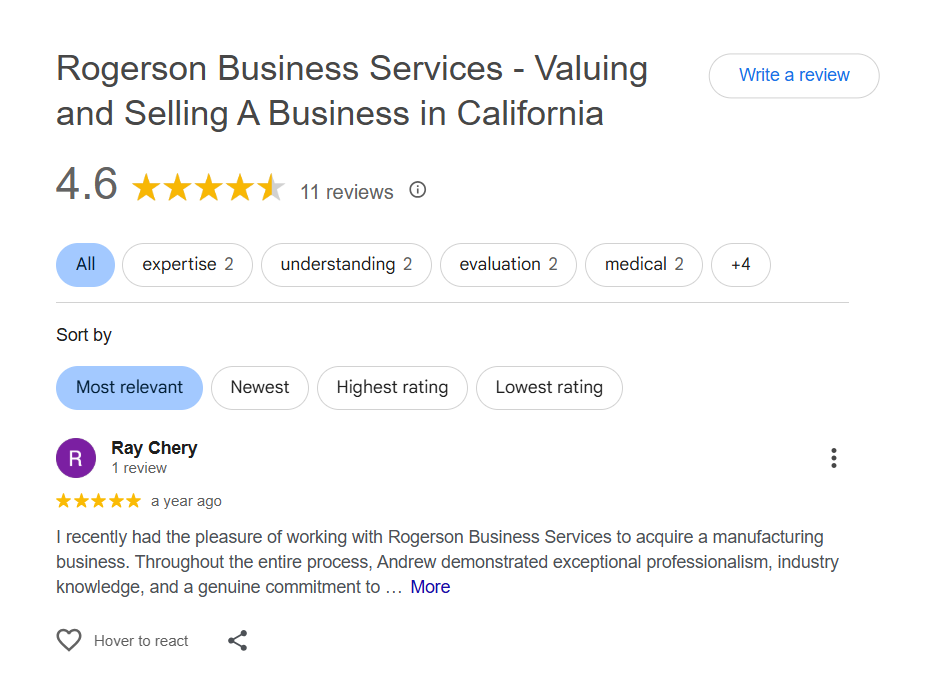
See more reviews and testimonials.
Is your business currently operating at the top of its game? Send a free inquiry today! Call Andrew Rogerson, Rogerson Business Services, toll-free (844) 414-9700 | Leave a message – I’ll call you right back
Key Takeaways
- Get your financial records in order. Buyers want to see clear, organized statements that show exactly where the money comes from and where it goes. Make sure owner expenses are separate.
- Make sure all your licenses, certifications, and inspection records are up to date and easy to find. This shows you’re compliant and reduces risk for the buyer.
- Focus on building up your recurring revenue through service contracts. Predictable income from regular inspections and testing is a big plus for buyers.
- Develop your team. Buyers look at who you have working for you. Having certified technicians and clear employment details makes your business look more stable.
- Start stepping back from daily operations. Transition customer relationships and key tasks to your team. This proves the business doesn’t just run on you, which increases its value.
Prefer to watch a video?
Hit play and watch below!
Strengthen Financial Documentation and Reporting
Getting your financial house in order is a big step when you’re thinking about selling your fire and life safety business. Buyers want to see clear, organized numbers because they show your business is stable and predictable. So, let’s get these documents squared away.
Organize and Review Financial Statements
First things first, you need to gather at least three years of your financial statements. Make sure they’re clean and use accrual-based accounting. This means recording revenue when it’s earned and expenses when they’re incurred, not just when cash changes hands. It’s also important to separate your personal finances from the business’s.
Mixing them up makes it hard for a buyer to understand the company’s true financial health. Consider using accounting software to help you track everything properly, such as revenue, expenses, and seller’s discretionary earnings (SDE). This makes your financials much easier to understand and trust.
Clarify Revenue Streams and Contracts
Buyers really want to know where your money is coming from. Break down your revenue by service type – things like inspections, monitoring, general service, installations, and any special projects. This gives them a clear picture of your business model. Also, make sure you have copies of all your key service contracts and inspection contract documentation.
Pay close attention to the details in these contracts, like renewal schedules and any termination clauses. This information is vital for a buyer to assess the stability of your income.
Having this organized can really help when you’re talking to potential buyers about your business’s future potential. You can find more information on streamlining operations with platforms like Uptick for fire protection.
Normalize Owner Compensation and Expenses
This is where you clean up any expenses that aren’t typical for running the business on a day-to-day basis. Items such as personal travel, excessive salaries, or one-time, nonrecurring expenses need to be clearly identified and adjusted. Buyers will look at your Seller’s Discretionary Earnings (SDE) or EBITDA, and these adjustments help present a more accurate picture of your business’s profitability.
For example, if you took a large, unusual bonus last year, you’ll want to show what the earnings would look like without it. This normalization process is key to achieving a fair valuation because it reflects the business’s true earning power as it will operate under new ownership.
Enhance Operational Efficiency and Compliance
When you’re getting ready to sell your fire alarm business, making sure your operations run like a well-oiled machine is crucial. Buyers want to see that your business isn’t just making money but doing so in an organized, repeatable, and compliant way. This makes their job easier and reduces the perceived risk after they take over.
Document Inspection and Service Records
Start by gathering all your inspection and service records. These documents are proof that you’ve been doing what you say you do, and that you’re following all the rules. Think of it like a report card for your business’s performance. You need to show that every inspection, service call, and installation is properly logged. This includes dates, technician names, what was done, and any findings. Clean, detailed records demonstrate a commitment to quality and regulatory adherence.
This meticulous record-keeping is vital for a smooth due diligence process because it directly addresses buyer concerns about past performance and potential liabilities. Without them, buyers might assume the worst, which can hurt your valuation.
Review Licensing and Certification Requirements
Next, take a close look at all your business licenses and certifications, as well as those held by your technicians. Are they all current? Are they the right ones for the services you offer in the areas you operate? A thorough licensing compliance audit is a smart move. You don’t want any surprises here. Buyers will definitely check this, and any gaps can cause significant delays or even kill a deal.
Make sure you have copies of everything readily available and that there are no expired permits or certifications hanging around. This also applies to any manufacturer authorizations you might have for specific equipment.
Keeping these up to date shows you’re serious about operating legitimately and professionally.
Streamline Operational Systems and Data
Finally, think about the systems you use to run your business day to day.
Are you still relying on paper logs and manual scheduling?
If so, now’s the time to update. Implementing or improving your use of field service management software can make a huge difference. This kind of system helps with scheduling, dispatching, tracking work orders, and managing customer data all in one place. It also makes generating reports much easier. Buyers see modern operational systems as a sign of efficiency, reduced errors, and scalability.
It suggests that the business can grow without a proportional increase in overhead. Having well-organized data, from customer information to service history, makes the buyer’s transition much smoother and increases their confidence in the business’s future potential. It shows you’ve invested in the infrastructure needed for continued success.
Buyers are looking for businesses that are not only profitable but also well-managed and compliant. Operational efficiency and robust documentation reduce their perceived risk and signal a well-run company ready for its next chapter.
Cultivate Recurring Revenue and Customer Loyalty

When you’re thinking about selling your fire and life safety business, one of the biggest things buyers look at is how much money comes in regularly. This is your recurring revenue, and it’s super important because it means your business isn’t just a one-hit wonder. It demonstrates stability and a predictable income stream, making your company much more attractive. So, let’s talk about how you can really build this up.
Increase Recurring Inspection and Testing Agreements
Think about your current clients. Many of them probably need regular inspections for their fire extinguishers, alarm systems, or sprinkler systems. These aren’t just random check-ups; they’re often required by law or insurance policies. Turning these one-time service calls into ongoing inspection and testing agreements is a goldmine for recurring revenue. It means you have a steady flow of income month after month, year after year. You can highlight to clients how these regular checks prevent bigger, more expensive problems down the line and help maintain compliance. This approach not only secures your income but also builds a stronger relationship with your customers, making them less likely to look elsewhere.
Standardize Multi-Year Service Contracts
While annual agreements are good, aiming for multi-year service contracts can really boost your business’s appeal. These longer-term commitments offer even more predictability for you and for potential buyers. When you standardize these contracts, you make it easier to manage your services and finances. Consider offering incentives to clients who sign up for two or three years.
This could be a slight discount or priority service. It shows buyers that you have a solid plan for long-term customer retention and that your revenue streams are well-established. It’s all about creating a stable foundation that a new owner can build on with minimal risk.
You can find more information on preparing your fire protection company for sale by looking at how other businesses structure their deals.
Document Auto-Renewal Terms and Churn Rates
It’s not enough to just have contracts; you need to show how well they work. This means clearly documenting all the auto-renewal terms. When a contract is set to renew automatically, it’s a clear signal of customer satisfaction and commitment. You also need to track your churn rate – that’s the percentage of customers who stop doing business with you.
A low churn rate is a huge positive. Buyers want to see that you keep your customers happy and that they stick around. So, keep good records of why customers leave, if they do, and use that information to improve your services.
This kind of data shows buyers that you understand your customer base and are actively working to maintain strong relationships, which is key for sustained success.
Build a Resilient and Skilled Workforce
Your team is the backbone of your fire and life safety business, so you need to make sure they’re solid before you think about selling. Buyers look closely at your staff because a strong, capable team means less risk for them after the sale. It shows the business can keep running smoothly without you being there every second.
Assess Team Structure and Employment Contracts
Take a good look at how your team is set up. Are roles clearly defined? Do you have a solid organizational chart that makes sense? It’s also important to review all employment contracts. Make sure they’re up to date and comply with current labor laws. This includes things like job descriptions, pay scales, and any benefits offered.
Having clear contracts protects both you and your employees and shows buyers that you run a professional operation. This kind of organization can really help with a technician retention strategy.
Highlight Technician Certifications and Licenses
Your technicians are the ones out in the field doing the actual work, so their qualifications matter a lot. Gather all documentation related to their certifications, like NICET or any local equivalents, and any manufacturer-specific training they’ve completed. Buyers want to see that your team is not only licensed but also highly skilled and up to date on the latest technologies and safety standards.
This isn’t just about having the paperwork; it’s about demonstrating the quality of service your company provides. A well-certified team directly translates to fewer errors and better customer satisfaction, which are big pluses for any potential buyer.
Manage Employee and Customer Relationships
Think about how your employees interact with each other and with your customers. A positive work environment often leads to better customer service. Document your processes for handling employee grievances and customer complaints. If your team has good relationships with clients, especially long-term ones, that’s a huge asset.
Buyers will pay more for a business where customers trust and rely on the team, not just the owner. Building and maintaining these relationships is key, so make sure you have systems in place to track customer feedback and employee satisfaction. It shows stability and a commitment to service that goes beyond just the transaction.
Develop a Strategic Sale Process
Selling your fire and life safety business is a big deal, and you want to make sure you get the best outcome. It’s not just about finding someone to buy it; it’s about finding the right buyer and setting up a process that shows off your company’s true worth. Think of it like planning a major event – the more organized you are beforehand, the smoother everything goes and the better the results.
Identify Potential Strategic and Financial Buyers
First off, you need to figure out who might be interested in buying your business. There are generally two main types of buyers: strategic and financial. Strategic buyers are often larger companies in the fire and life safety industry, or maybe companies in related fields like building services or security.
They’re looking to expand their own operations, gain market share, or add your services to their existing offerings. Because they can often see ways to combine operations and cut costs, they might be willing to pay more.
Financial buyers, on the other hand, are typically private equity firms or investment groups. They’re looking for businesses with strong cash flow and growth potential that they can improve and eventually sell for a profit. They focus heavily on the numbers and the potential for return on investment.
Knowing the difference helps you tailor your approach to each type.
Engage an Experienced M&A Advisor
Selling a business is a complex process, and it’s usually something you only do once. That’s why bringing in an experienced Mergers & Acquisitions (M&A) advisor is a really smart move. They know the market, understand how to value businesses like yours, and have a network of potential buyers.
An advisor will help you prepare all your documentation, create a compelling story for potential buyers, and manage the entire sale process from start to finish. They can handle initial inquiries, screen buyers, and negotiate terms, which frees you up to keep running your business day-to-day.
Look for someone who has specific experience in the fire and life safety sector or similar service-based industries, because they’ll speak the language buyers understand and know what makes your business attractive.
Prepare a Confidential Information Memorandum
Once you’ve got an advisor on board, the next step is to create a Confidential Information Memorandum, or CIM. This document is essentially your business’s sales brochure. It’s a detailed overview that you’ll share with serious potential buyers after they’ve signed a Non-Disclosure Agreement (NDA).
The CIM needs to present your business in the best possible light, covering everything from your company’s history and services to its financial performance, customer base, operational systems, and growth opportunities. It should clearly explain your recurring revenue streams, your contracts, your team’s qualifications, and why your business is a solid investment.
A well-prepared CIM is key to generating interest and getting competitive offers. It shows buyers you’re organized and serious about the sale.
Minimize Owner Dependence for Increased Valuation
When you’re thinking about selling your fire and life safety business, buyers look closely at how much the company relies on you. If you’re the main person handling everything, it can make buyers nervous because they worry about what happens after you leave. So you need to show them the business can run smoothly without you there every single minute.
Transition Key Customer Relationships
Often, owners have personal relationships with their biggest clients. Buyers see this as a risk. To fix this, start moving those relationships over to account managers or senior technicians. This shows buyers that your client base is stable and not tied to just one person.
For example, if you always handle the annual review for a major commercial property, have a senior technician or a dedicated account manager lead that meeting.
Document these handoffs so buyers can see a clear continuity plan. This makes your business much more attractive, especially to strategic buyers who want a smooth integration.
Delegate Estimating and Quoting Processes
If you’re the one approving every estimate and quote, buyers will worry about delays and potential errors once you’re gone. Start delegating these tasks to estimators or project managers. Make sure they have clear pricing guidelines and understand the company’s profit margins.
Develop a system that allows them to generate quotes independently, perhaps using specialized software. This demonstrates that your sales pipeline is robust and not bottlenecked by your personal involvement. A well-documented quoting process reduces perceived risk and increases the business’s overall value.
Establish Clear Compliance Oversight
Compliance is huge in the fire and life safety industry. If you’re the sole person ensuring all inspections meet code and that licenses are up to date, that’s a major dependency. You need to build a system where a dedicated role or team manages compliance. This could be a safety manager or a quality control lead.
They should be responsible for tracking license renewals, ensuring all technicians are properly certified, and maintaining accurate records of all inspections and tests. Having this oversight in place shows buyers that your business operates with a high degree of professionalism and reduces the chance of costly compliance issues down the road. It’s about proving that your business is reliable and self-sufficient.
Buyers are willing to pay more for a business that runs like a well-oiled machine, not one that grinds to a halt when the owner is on vacation. Demonstrating that your team can handle daily operations, client management, and compliance independently is key to maximizing your sale price.
Wrapping Things Up
So, you’ve put in the work to get your fire and life safety business ready for sale. That means organizing your paperwork, making sure your contracts are solid, and getting your finances in order. It might have felt like a lot, but all that effort pays off. A well-prepared business looks much more attractive to buyers, which usually means a better deal for you.
Remember, the goal is to make your company look like a smooth-running machine that doesn’t need you to keep it going. If you’ve done your homework, you’re in a strong position to get a great outcome.
Now, if you want to see just how ready you are, consider getting a pre-sale readiness assessment. It’s a good next step to make sure you haven’t missed anything.
Is your business currently operating at the top of its game? Send a free inquiry today! Call Andrew Rogerson, Rogerson Business Services, toll-free (844) 414-9700 | Leave a message – I’ll call you right back
Frequently Asked Questions
Why should I get my fire and life safety business ready to sell, even if I’m not selling soon?
Getting your business ready early is like prepping for a big game. It makes your company look stronger and more appealing to buyers. This means you can likely get a better price and have a smoother selling process later on. Think of it as making your business the most attractive option possible.
What’s the most important thing buyers look for in a fire safety business?
Buyers really love businesses that have steady, repeating income. This often comes from regular inspection and maintenance contracts. They also want to see that your business runs smoothly without you having to be involved in every single detail. Basically, they want a reliable business that consistently makes money.
How can I make my business’s finances look better to a buyer?
You’ll want to make sure all your financial records are super clear and organized. This means separating your business money from your personal money, showing exactly where your income comes from, and making sure any special or one-time costs are easy to understand. Clean books build trust.
What kind of paperwork do I need?
You’ll need to have all your inspection reports, service records, and customer contracts neatly organized. Also, make sure all your company’s and employees’ licenses and certifications are up to date and easy to find. This shows you’re compliant and professional.
How important is my team when selling my business?
Your team is a big deal! Buyers want to know you have skilled employees who know what they’re doing. Having technicians with good certifications and a stable team that customers trust makes your business much more valuable. It shows the business can keep going strong after you sell.
Do I need to hire someone to help me sell my business?
While you can try to sell on your own, working with an experienced M&A advisor (that’s a merger and acquisition advisor) is usually a smart move. They know the market, can help you find the right buyers, negotiate the best deal, and guide you through the whole complicated process. It’s like having an expert guide for a big journey.