
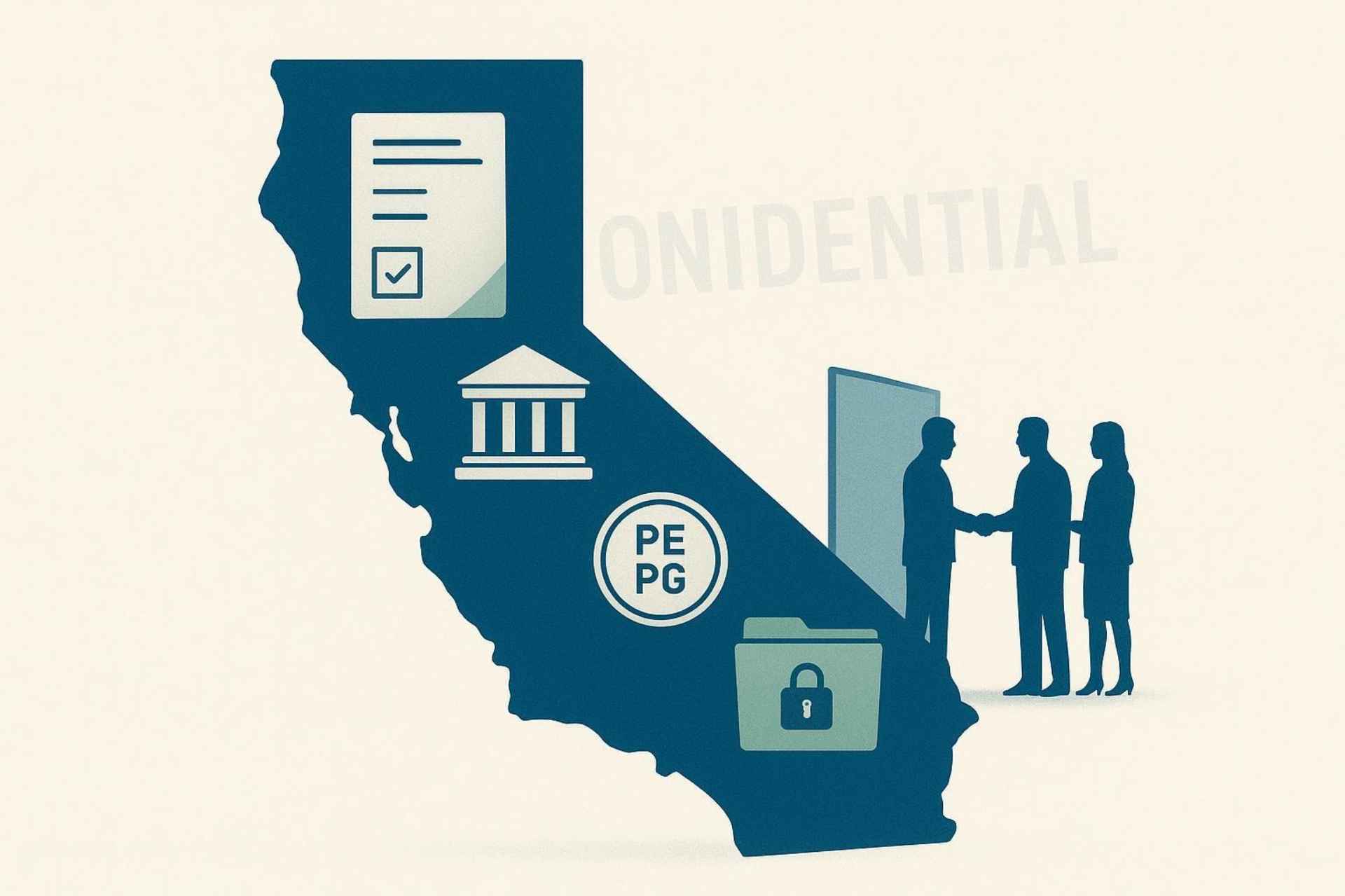
By Andrew Rogerson, Founder, Rogerson Business Services (California M&A advisory) When considering an Environmental M&A Advisor vs. a Generic Broker, it’s important to understand the differences between these roles in the context of business acquisitions.
Last updated: March 24, 2026
Author note: This guide reflects common SMB sell-side practice in California environmental services transactions. It is not legal, tax, or investment advice.
You want to sell, but you can’t risk clients, employees, subcontractors, or regulators finding out too soon.
Here’s the deal: you can sell an environmental consulting business confidentially in California if you control the process, pick the right buyers, and lead with a retention plan that complies with state law. In one recent “leak‑and‑exit” scenario we studied, a subcontractor heard a rumor, told a field tech, and the story spread by lunch.
Two licensed leaders left within a week, project schedules slipped, and buyers pulled back. We rebuilt the outreach with anonymous teasers, stricter NDAs, a gated data room, and AB 692–aware stay incentives. Stability returned, and stronger buyers re‑engaged at better terms.
Do you see how fast one rumor can derail value, and how a structured process can restore it?
Testimonials
Daniel and Simona Bote
“We are very satisfied with the entire process of selling our business. Although it was long and we encountered many challenges, you took the time to explain the issues to us as they came with integrity, patience and you did so promptly. You represented us and the buyer of our business well giving each party the adequate amount of attention to make sure everything was understood and coached us through each issue. We are thankful for your professionalism and kind approach through some of the difficulties we encountered. We would confidently recommend your services to anyone looking to sell or buy a business in the area you cover. Thank you Andrew.“
Daniel and Simona Bote – Owners – Central Valley Trees & Landscape Services, Inc.
See more reviews and testimonials.
Is your business currently operating at the top of its game? Send a free inquiry today! Call Andrew Rogerson, Rogerson Business Services, toll-free (844) 414-9700 | Leave a message – I’ll call you right back
Key takeaways
- Prioritize buyer profiles already qualified for California public/regulated work, and keep outreach anonymous until NDAs and proof of fit are in place.
- Treat the subcontractor and industry rumor mill as the single point of failure; enforce vendor NDAs, watermark data, and monitor access.
- Lead sequencing with California‑law‑compliant retention and stay bonuses (AB 692) to protect licensed responsible‑charge roles and field teams.
Who to prioritize under tight confidentiality
Strategic acquirer already qualified on California public/regulated work.
Pick a strategic buyer that already serves California public agencies and regulated private clients. They understand contract standards, safety culture, and responsible‑charge expectations. Because they match your work profile, you can share less before LOI, yet they still grasp the value. Their credibility also makes Contracting Officers more comfortable after signing when you coordinate recognition or novation steps.
PE‑backed West Coast platform
Choose a private‑equity platform with an active California footprint and clean‑team capability. They bring capital for retention pools and integration resources, but they must follow a disciplined, tiered disclosure process. Ask for proof of funds and platform compliance history up front, then use clean‑team folders for competitively sensitive items.
How to sell an environmental consulting business confidentially: a step‑by‑step process
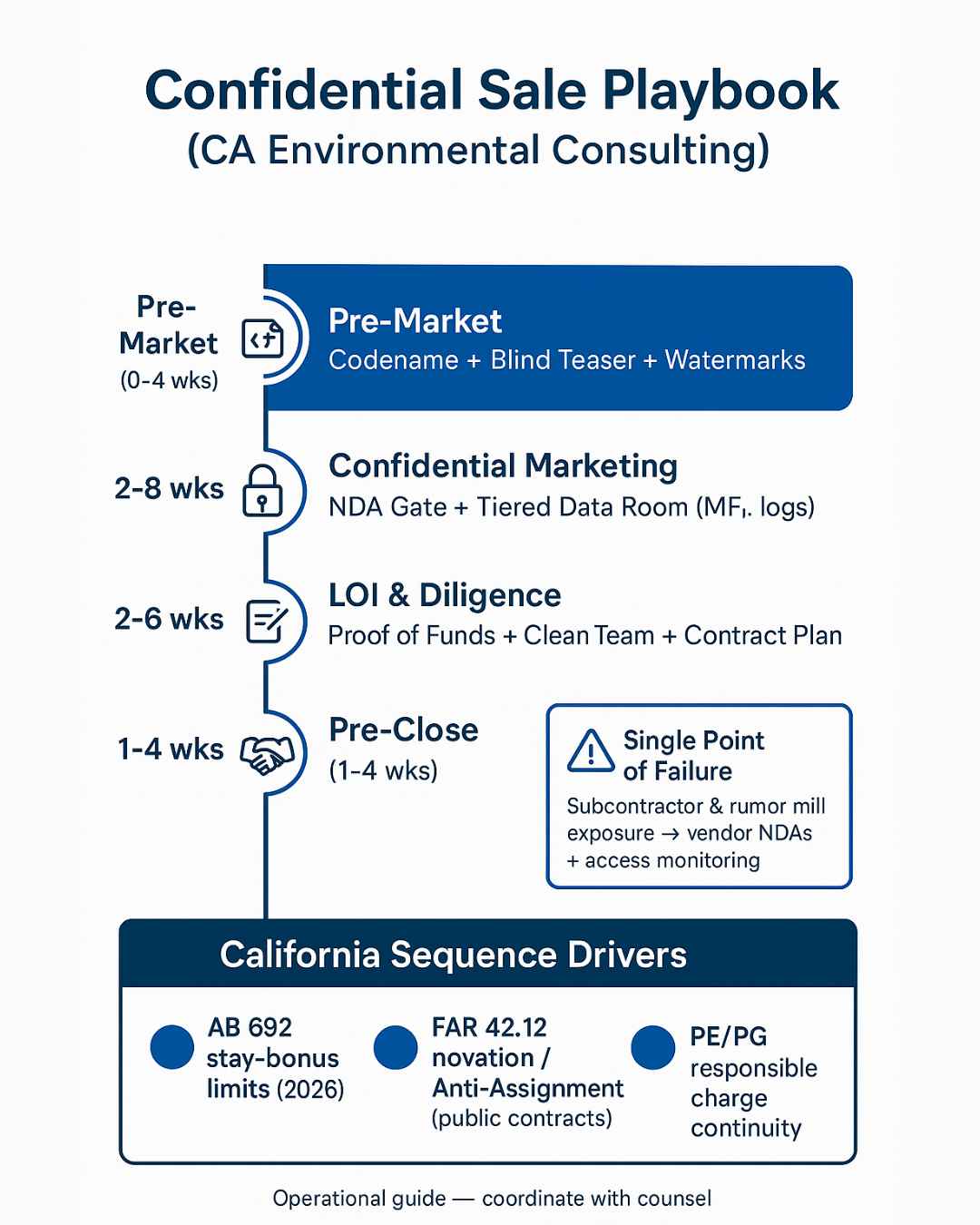
Phase 1 — Pre‑market (0–4 weeks)
Start with a codename and a blind teaser that scrubs client names, site identifiers, and licensure details while signaling scope (public contracts, remediation, industrial hygiene). Watermark each teaser uniquely so you can trace any leak. Build a least‑privilege access plan: limit access to the owner, M&A advisor, and counsel until LOIs arrive, and refer to internal diligence with neutral language.
Draft NDAs with permitted‑use only, no‑contact with employees or clients, return/destroy obligations, and calibrated language on non‑solicit to fit California law, then have counsel review. Inventory public and regulated contracts early.
Flag anti‑assignment and change‑of‑control provisions and note federal novation needs if an asset deal is likely, and plan Contracting Officer communications for after LOI signing.
Confirm responsible‑charge coverage for PEs/PGs (and CEG/CHG where relevant) and pre‑identify alternates to avoid a gap on stamped work. Finally, audit HAZWOPER training and medical/exposure record custody and plan secure transfer at close.
Phase 2 — Confidential marketing (2–8 weeks)
Run anonymous outreach to a short list of A/B buyers and require a brief written fit statement and soft evidence of funding before NDA. After you execute NDAs, open Tier 1 of your virtual data room with redacted financial aggregates, anonymized customer concentrations, safety performance, and compliance attestations.
Disable downloads, require MFA, and watermark dynamically while you monitor access logs daily. Hold management calls off‑site or after hours, using neutral labels so you can continue to sell the environmental consulting business confidentially without tipping off staff or subs.
Phase 3 — LOI and confirmatory diligence (2–6 weeks)
Shortlist three to five buyers and request lender interest letters or fund confirmations. Gate access to Tier 2 with fuller financials, limited named customer cohorts, and key‑person role outlines.
Place competitively sensitive items in clean‑team folders reviewed by outside counsel or walled‑off buyer personnel. Align on deal structure (asset vs. stock).
For federal or public contracts, prepare documentation for recognition or novation under FAR procedures, if needed and schedule your first Contracting Officer discussion after LOI execution to continue selling the environmental consulting business confidentially through the negotiation peak.
Phase 4 — Pre‑close stability and handoff (1–4 weeks)
Finalize California‑law‑compliant retention and stay bonuses, then execute paperwork the same day you brief key staff. Time first‑wave communications within 24–48 hours of LOI to preempt rumors, and script messages for supervisors.
File change‑of‑owner/operator requests for air permits and submit water program updates as applicable; stage portal credentials and fee payments so operations never pause. Run a leak drill: if a rumor surfaces, freeze VDR access, activate vendor NDAs, unify messaging, and accelerate retention offers for at‑risk technical leaders.
Prefer to watch a video?
Hit play and watch below!
California compliance that shapes your sequence
Lead with retention and stay‑bonus design under AB 692
In 2026, California restricts “stay‑or‑pay” repayment clauses. Structure retention so you pay at milestones or at period-end, rather than clawing back money if someone leaves. Use separate agreements, prorate awards over time, and avoid interest or penalties. Coordinate tax timing and allow counsel review before you roll out offers. For a practitioner overview of these limits, see Proskauer’s analysis of California’s new stay‑or‑pay restrictions under AB 692 (2026).
Anti‑Assignment Act and FAR novations for public/federal contracts
If you sell assets and need the government to recognize a successor in interest, plan a novation package and follow FAR Subpart 42.12. The Responsible Contracting Officer decides recognition and documentation. Stock purchases can avoid novation because the contracting party remains the same, yet change‑of‑control clauses may still require notice. For statutory background, review the Anti‑Assignment Act, 41 U.S.C. §6305 and a practitioner explainer on novation mechanics from DLA Piper.
Responsible charge for licensed professionals (PE/PG)
Keep a licensed professional in responsible charge of engineering and geologic work throughout the transition. California defines responsible charge for engineers in Title 16 CCR §404.1 (BPELSG Board Rules), and for geologists in Business and Professions Code §7805. Maintain continuity plans and promptly designate alternates if availability shifts; when in doubt, confirm any firm‑level notification expectations with the Board.
Permits and water programs
Expect air district permits to require prompt change‑of‑ownership filings. For example, the Bay Area Air Quality Management District provides transfer‑of‑ownership procedures in its permitting portal (BAAQMD apply/transfer page). South Coast AQMD also outlines change‑of‑owner/operator steps (SCAQMD permits overview). For stormwater under the Industrial General Permit, coordinate SMARTS updates or a new Notice of Intent for the new operator and update the SWPPP within required time frames; if you hold water rights, file ownership‑change petitions with the State Water Resources Control Board.
OSHA HAZWOPER training and record transfer
Preserve HAZWOPER qualifications by completing annual refresher training and securely transferring exposure/medical records to the successor employer. OSHA standard 29 CFR 1910.1020 requires long‑term retention and timely access. Build these covenants into your purchase agreement so access and confidentiality continue without interruption.
Leak prevention operations that stop the rumor mill
Design around subcontractor and industry rumor exposure. Require purpose‑limited NDAs with labs, drillers, disposal facilities, and specialty subs that may notice unusual activity. Map least‑privilege access for internal staff and review it weekly during marketing. Use a virtual data room with MFA, dynamic watermarks, download restrictions, and audit logs; inspect logs daily when buyers are active. If you detect a leak, freeze access immediately, trigger vendor NDA remedies, issue a single internal script, and advance retention payouts for threatened roles. This operational discipline lets you sell environmental consulting business confidentially while protecting regulated contracts and relationships.
Buyer vetting in practice (neutral example)
In a recent California workflow, an advisor coordinated blind teasers to five pre‑qualified buyers. After NDAs, Tier 1 data included anonymized customer cohorts and safety metrics. Two strategic acquirers already cleared for public work advanced to LOI. Competitively sensitive items sat in clean‑team folders. Only after the LOI and proof of funds were provided did the seller disclose the named regulators and key staff, which was synchronized with the retention paperwork.
A firm like Rogerson Business Services can support this cadence in California by coordinating buyer vetting, gated disclosures, and the timing of Contracting Officer communications. Andrew Rogerson is a five‑time business owner and the author of four books on business ownership; he holds the CBB, CM&AP, and M&AMI credentials.
Next steps
Read more about negotiating offers and terms in Negotiating Environmental Consulting Firm Sale, then align your timeline and retention model with counsel so you can sell the environmental consulting business confidentially from teaser to close. Get a Confidential Marketing Plan.
Is your business currently operating at the top of its game? Send a free inquiry today! Call Andrew Rogerson, Rogerson Business Services, toll-free (844) 414-9700 | Leave a message – I’ll call you right back
FAQs owners ask M&A advisors about confidential sales.
1) When should I tell employees, clients, and regulators that I’m selling?
Tell almost no one pre‑LOI. In California, you usually protect value by running anonymous outreach first, then disclosing to a small group of key staff right after LOI—at the same time you present retention paperwork. You then coordinate client and regulator/contracting officer communications on a tight timeline (often within 24–48 hours of internal briefings) to control the message rather than chase rumors.
2) What can I share before an NDA without blowing confidentiality?
Before an NDA, share only a blind teaser: high‑level services, geography, general end markets, and broad financial ranges—without client names, site identifiers, license‑holder names, or project locations that “give it away.” After an NDA, use a tiered data room so buyers see redacted aggregates first, then receive named details only after LOI and proof of funds.
3) How do I keep licensed PE/PG responsible‑charge coverage intact during a sale?
Treat responsible‑charge continuity as a diligence requirement, not a closing task. Identify who holds the responsible charge today, confirm backup coverage, and map who will sign/seal and supervise work during the transition. If a licensed leader could leave after rumors surface, prepare AB 692‑aware retention incentives and a day‑one coverage plan so projects don’t stall.
4) I have public or federal work—will the buyer need a novation, and when do we bring in the Contracting Officer?
If you sell assets, the buyer may need the government to recognize a successor in interest, which often means a novation process under FAR procedures. If you sell stock, you may avoid novation because the contracting party stays the same, but change‑of‑control clauses and notice requirements can still apply. In practice, you usually plan the package early, but time initial Contracting Officer communications for after LOI, so you don’t trigger unnecessary attention before you’ve locked deal terms.
5) What’s the fastest way confidentiality breaks in environmental services deals—and how do I prevent it?
The subcontractor and vendor network usually leaks first. Labs, drillers, disposal facilities, and specialty subs notice unusual requests, site visits, or document pulls, and then the rumor mill does the rest. Counter it with purpose‑limited vendor NDAs, unique watermarking, least‑privilege access, and daily monitoring of data‑room logs during active buyer diligence.
Sources and notes
- Anti‑Assignment Act, 41 U.S.C. §6305 — statutory bar on transfer of federal contracts without consent: U.S. Code text.
- FAR Subpart 42.12 Novation Overview — Documentation and Recognition Mechanics Post-Asset Sale: DLA Piper Explainer.
- Responsible charge definitions — engineers and geologists in California: BPELSG Board Rules, Title 16 CCR §404.1; Geologist & Geophysicist Act, B&P Code §7805.
- Retention/stay‑bonus limits in 2026 — design bonuses without unlawful clawbacks: Proskauer on California’s new restrictions under AB 692.
- Air permits — change‑of‑ownership examples and portals: BAAQMD apply/transfer page; South Coast AQMD permits overview.
- OSHA record retention and transfer obligations — long‑term access to exposure/medical records: OSHA 29 CFR 1910.1020.
Note: This guide provides operational steps for owners and advisors. Always coordinate specifics with California employment, public‑contract, and regulatory counsel before you act.