

By Andrew Rogerson, Founder, Rogerson Business Services (California M&A advisory)
When considering Marketing a Fire & Life Safety Business for Sale Confidentially, it’s important to understand that you want to attract buyers and avoid the risk of losing contracts or technicians.
Last updated: April 25, 2026
Testimonials
Gordon Greve
“Andrew, I must compliment you on such a complete package.
I will review and chat about any questions.“
Gordon M. Greve, Managing Principal – SIGMA ACQUISITIONS, LLC
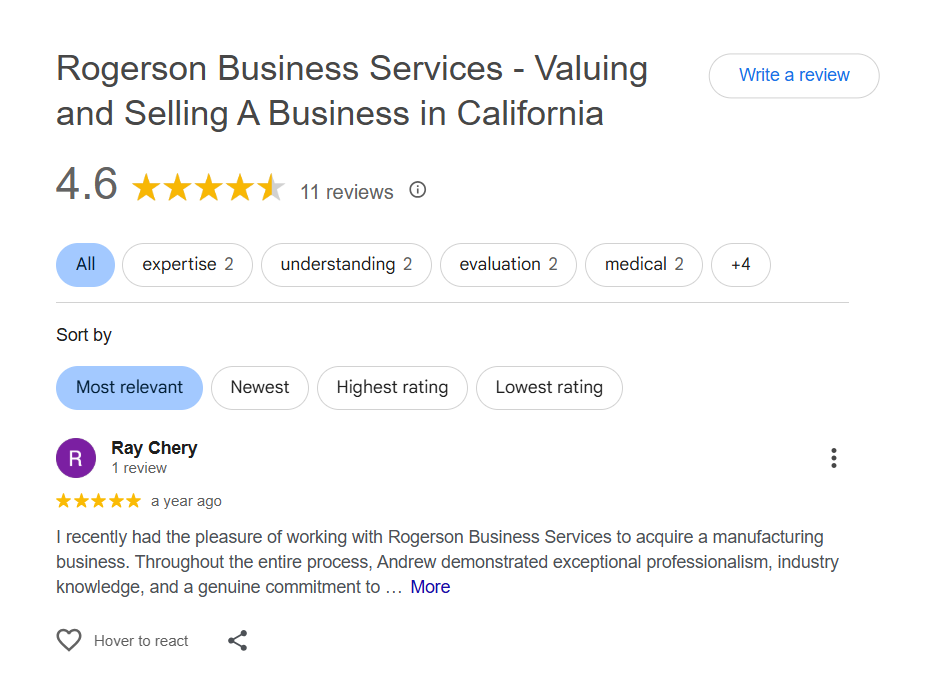
See more reviews and testimonials.
Is your business currently operating at the top of its game? Send a free inquiry today! Call Andrew Rogerson, Rogerson Business Services, toll-free (844) 414-9700 | Leave a message – I’ll call you right back
Key takeaways
- Protect your revenue first, because buyers pay for stability and predictable cash flow.
- Use staged disclosure: a blind teaser first, then an NDA, then a deeper package for vetted buyers only.
- Control who sees what, when, and why, or one leak can trigger technician churn and customer anxiety.
- Position recurring revenue clearly, because it often drives valuation in fire and life safety.
You want to sell, but you cannot risk a leak

A fire and life safety business does not sell like an e-commerce store. You keep the lights on by showing up on time, passing inspections, and keeping monitoring accounts active.
So when you decide to sell, you face a trade-off. You need sufficient buyer outreach to create competitive tension, yet enough confidentiality to protect your contracts and technicians.
If you market too quietly, you get one buyer, one offer, and one set of terms.
If you market too loudly, you invite rumors, and rumors can move faster than you can contain them.
The standoff that killed value
I will keep this story simulated, but the pattern shows up in California transactions more often than owners expect.
An owner asked a junior team member to “sound out” a local competitor about interest. The message went to a personal email, and then it jumped to a group text.
Within a week, two technicians started taking calls from recruiters. Within two more weeks, a key technician will leave.
Service capacity dropped, response times slipped, and one property manager pushed back on renewal terms.
The owner still found a buyer, but the buyer cut the price and demanded tougher terms because the buyer now saw a business under stress.
That standoff started with marketing, yet it ended in valuation.
Market the opportunity, not the identity
Confidential marketing works when you separate “What you sell” from “Who you are” until a buyer earns access.
You can do that because you do not need to reveal your company name to create interest. You need to show an investable profile.
1. Run staged disclosure from day one
Staged disclosure keeps you in control, and it keeps buyers focused.
Step 1: Start with a blind teaser
A blind teaser describes the opportunity without exposing identifying details.
It should highlight:
- service lines (alarm, sprinkler, extinguisher, inspection, monitoring)
- customer mix (commercial, municipal, healthcare, education)
- geography at a regional level (for example, “Southern California”)
- recurring revenue percentage
- general size metrics (revenue range, EBITDA range)
It should not include:
- the business name
- the exact city
- photos with vehicles, uniforms, or signage
- customer names
- technician names or org charts
This approach aligns with common confidential sale practices that use a blind profile first, and then require an NDA before sharing sensitive details. For general background on staged confidentiality and NDAs, see this discussion of confidentiality protections in a sale: staged disclosure and NDAs (https://focuslawla.com/keeping-information-confidential-selling-business/).
Step 2: Require an NDA before you share the real package
NDA means non-disclosure agreement. It sets the confidentiality rules and provides remedies if a buyer violates them.
You can enforce an NDA only if you use it early, so treat it as the gate.
After a buyer signs an NDA, you can share a tighter “Phase 1” package.
Step 3: Share a CIM only after you qualify the buyer
CIM means confidential information memorandum. It usually includes the story, the numbers, and the operating model.
Before you hand over a CIM, you should qualify the buyer.
Ask for proof of funds, lender pre-qualification, or a clear acquisition profile, because curiosity does not close deals.
Step 4: Control diligence access with a data room
Use a secure data room and grant access in layers.
Give early-stage buyers redacted versions of sensitive documents. Then expand access upon signing an LOI.
LOI means letter of intent. It outlines the proposed price and terms before the parties draft final agreements.
2. Design buyer outreach to protect technicians and contracts
Confidential outreach fails when it drifts into informal channels.
So build guardrails.
Use an intermediary for the first contact.
If you call buyers directly, you risk recognition and off-the-record conversations.
If an intermediary runs the first contact, you reduce the odds that someone ties your opportunity back to your name.
Narrow the buyer universe early
A fire and life safety business often depends on recurring inspections and monitoring accounts, so buyers care about continuity.
Target buyers who have a credible plan to maintain high service quality.
For example:
- established fire protection operators who understand labor and scheduling
- specialty contractors who want to add recurring monitoring revenue
- select private investors with relevant operating support
Script your outreach and your follow-ups
Write down who contacts whom, what they can share, and what they cannot share.
Do this because a single “helpful” detail can identify your company.
3. Protect contracts by packaging risk the way buyers underwrite it
Buyers do not just buy revenue. They buy confidence.
So you should present contract stability with discipline.
Show contract terms without naming customers early
In the early stages, share:
- Contract counts by type
- Average contract value
- Renewal cadence
- Attrition over 12 to 24 months
Then reveal customer names later, after the buyer earns that access.
Reduce concentration before you market hard
If one property manager drives 30 percent of your revenue, buyers will notice.
You can reduce that risk, but you need time.
So if you want to sell within 6 to 24 months, start now.
4. Position recurring revenue so buyers pay for it
Recurring revenue often lifts valuation in service businesses, but only if buyers believe it will stick.
So spell out what makes it durable.
Separate recurring from project revenue
Break revenue into:
- Monitoring
- Recurring inspections
- Service and repairs
- Projects and installation work
Then explain what drives each category.
Tie recurring revenue to systems, not heroics
If one senior technician “holds the whole thing together,” buyers will price that risk.
Instead, show:
- Dispatch process
- QA process
- Inspection cadence
- Documentation standards
You do not need to share proprietary details early, yet you should show that the business runs on a system.
5. Add California-specific guardrails for people and data
Confidentiality touches people and data, and California takes both seriously.
Plan employee communications carefully
Employment rules vary by situation, but California sellers often need to manage written notices, transition communication, and other requirements in the sale process. Use qualified counsel for your facts and your timeline. For general discussion of employee issues, buyers and sellers consider California employment issues in a sale (https://natlawreview.com/article/what-california-employers-should-consider-when-buying-or-selling-business).
Treat customer data as a regulated asset
If your business collects personal information from California residents, you should also consider your privacy obligations when sharing information during a transaction.
The California Attorney General summarizes consumer rights under the California Consumer Privacy Act (CCPA), including the right to opt out of the sale or sharing of personal information and the requirement that businesses honor opt-out signals like Global Privacy Control. See California Consumer Privacy Act (CCPA) (https://oag.ca.gov/privacy/ccpa).
A structured process protects stability and attracts serious buyers
When you run staged disclosure, you control the flow of information.
When you qualify buyers early, you reduce noise.
When you clearly package recurring revenue and contract risk, you help buyers move faster.
Most importantly, you protect the thing buyers pay for.
Negotiation matters after you protect confidentiality
Confidential marketing gets you to the table, but negotiation determines what you keep.
If you want a practical walkthrough of negotiation tactics and the process, read “Negotiating the Sale” (https://www.midmarketbusinesses.com/about/deal-team/m-a-negotiation).
Next step
If you want to explore a confidential sale process for your fire and life safety company in California, I can map out a buyer outreach plan that fits your contracts, technicians, and timeline.
Get a Confidential Marketing Plan.
Is your business currently operating at the top of its game? Send a free inquiry today! Call Andrew Rogerson, Rogerson Business Services, toll-free (844) 414-9700 | Leave a message – I’ll call you right back
Author note: This guide reflects common SMB sell-side practice in California Fire & Life Safety business transactions. It is not legal, tax, or investment advice.
Disclaimer: This tutorial provides general information for California sellers in the Fire & Life Safety niche. Requirements and forms vary by jurisdiction. Confirm current rules with your regulators and consult qualified legal counsel and environmental professionals for your specific deal.
Further reading
How to Sell a Fire & Life Safety Business in California (Valuation, Buyers & Exit Strategy Guide)